(dev) Miso

By: Tova Ng

Miso is a Japanese seasoning paste made from fermented grain and soybeans. Tova Ng introduces the three most common types of miso and explains the different flavors and uses of each.

Find more Co+op Kitchen videos featuring information and easy recipes for making delicious meals at home, as well as handy hints from chefs and food enthusiasts who love sharing their passion for great food.

Video Transcript

Hi. My name is Tova Ng from Fresh Off the Truck mobile catering. Today I'm going to tell you about miso and how it is used.

Miso is a Japanese seasoned soybean paste. You've probably heard of it in miso soup. And it's basically made by fermenting soybeans with salt and a Japanese fungus called koji.

Miso ranges in color from light to dark, and the darker the color, the stronger the flavor.

Miso is full of vitamins, minerals, and protein. And has what the Japanese call umami, or a pleasant, savory taste, making it a great substitute for salt or soy sauce in many dishes.

Miso can be used to add depth of flavor to everything from sauces and dressings to marinades for meat, chicken and fish. You can even use it to flavor mashed potatoes.

Three common types of miso

You'll probably find your miso in the refrigerator section. And there's usually one to three types.

White miso (shiromiso)

White miso, or shiromiso, is actually not white but a light yellow, oatmeal color. It has a sweeter, milder, and less salty flavor than other misos, making it great for lighter soups, sauces, dressings, and fish.

Red miso (akamiso)

Akamiso, or red miso, has a bold, rich, and more salty flavor that white miso. The deep flavor of red miso can overpower mild dishes, so it should be used in small quantities and is a good choice to flavor glazes, hearty soups and meats.

Light and dark miso mix (awasemiso)

Awasemiso is a blend of the light and dark miso, and a lot of chefs like to mix this one themselves. You can mix your own, too.

Using and storing miso

When using miso, moderation is key. Follow the recipe if using miso for the first time, and err on the side of using less when in doubt. You can always add a little more, but it's hard to fix a dish that has become overly salty.

You should also remember that miso shouldn't be boiled or overcooked, because that destroys beneficial enzymes and can make your dish bitter. Add miso to the end of any dish that needs to boil or simmer.

Storing miso is easy. You can keep your miso opened in your refrigerator for up to about a year, since it's been fermented and preserved well. If you haven't opened your miso yet, then you can keep it indefinitely on your shelf.

In another episode, I'll show you how to make a delicious miso-glazed salmon. It's a dish that's sure to impress your family and friends, so check it out.

I'm Tova for Co+op, stronger together.

Source: https://coopmigrate.s3btech.in/food-lifestyle/cooking/miso

(prod) Miso

By: Tova Ng

Miso is a Japanese seasoning paste made from fermented grain and soybeans. Tova Ng introduces the three most common types of miso and explains the different flavors and uses of each.

Find more Co+op Kitchen videos featuring information and easy recipes for making delicious meals at home, as well as handy hints from chefs and food enthusiasts who love sharing their passion for great food.

Video Transcript

Hi. My name is Tova Ng from Fresh Off the Truck mobile catering. Today I’m going to tell you about miso and how it is used.

Miso is a Japanese seasoned soybean paste. You’ve probably heard of it in miso soup. And it’s basically made by fermenting soybeans with salt and a Japanese fungus called koji.

Miso ranges in color from light to dark, and the darker the color, the stronger the flavor.

Miso is full of vitamins, minerals, and protein. And has what the Japanese call umami, or a pleasant, savory taste, making it a great substitute for salt or soy sauce in many dishes.

Miso can be used to add depth of flavor to everything from sauces and dressings to marinades for meat, chicken and fish. You can even use it to flavor mashed potatoes.

Three common types of miso

You’ll probably find your miso in the refrigerator section. And there’s usually one to three types.

White miso (shiromiso)

White miso, or shiromiso, is actually not white but a light yellow, oatmeal color. It has a sweeter, milder, and less salty flavor than other misos, making it great for lighter soups, sauces, dressings, and fish.

Red miso (akamiso)

Akamiso, or red miso, has a bold, rich, and more salty flavor that white miso. The deep flavor of red miso can overpower mild dishes, so it should be used in small quantities and is a good choice to flavor glazes, hearty soups and meats.

Light and dark miso mix (awasemiso)

Awasemiso is a blend of the light and dark miso, and a lot of chefs like to mix this one themselves. You can mix your own, too.

Using and storing miso

When using miso, moderation is key. Follow the recipe if using miso for the first time, and err on the side of using less when in doubt. You can always add a little more, but it’s hard to fix a dish that has become overly salty.

You should also remember that miso shouldn’t be boiled or overcooked, because that destroys beneficial enzymes and can make your dish bitter. Add miso to the end of any dish that needs to boil or simmer.

Storing miso is easy. You can keep your miso opened in your refrigerator for up to about a year, since it’s been fermented and preserved well. If you haven’t opened your miso yet, then you can keep it indefinitely on your shelf.

In another episode, I’ll show you how to make a delicious miso-glazed salmon. It’s a dish that’s sure to impress your family and friends, so check it out.

I’m Tova for Co+op, stronger together.

Source: https://www.grocery.coop/food-lifestyle/cooking/miso

(prod) Michael Pollan: Three Simple Rules for Eating

By: Eve Adamson

Is Michael Pollan America’s sweetheart? People love to talk about his pithy pronouncements on how we should eat. At least where I live, he’s the subject of many a conversation at parties, in bars, in restaurants, in book groups. People mention him with reverence. He’s like a 21st-century E.F. Hutton. When Michael Pollan speaks…people listen. When he gives lectures, it’s standing room only. Food and diet book writers quote him constantly, and some even admit that he’s their celebrity crush.

I’ve seen him speak, and while he’s articulate and intelligent, he’s no George Clooney. I wasn’t weak in the knees or anything. I suspect his wide appeal is probably an indication of how confused everybody is about food, and how much we love it when people make it very clear to us what we should and shouldn’t eat.

Then again, if this is true, why is it that, once we know how to eat, we don’t do it? One of Michael Pollan’s most famous quotes is a simple one, but it tells you everything you ever need to know about eating. Practicing it would render weight-loss diets irrelevant, positively impact the environment, champion local food producers, and bring the processed food industry to its knees. You’ve probably heard it before. You may have even quoted it to your friends. It’s just this:

“Eat food. Not too much. Mostly plants.”

So simple, so clean, so memorable…and so hard to do! But why? What’s so difficult about embracing these three uncomplicated concepts, when they could have such a positive effect on personal and global health? Let’s break it down. Maybe we can find some answers.

Eat food.

When Michael Pollan says, “Eat food,” what he means is, “Eat real food,” as in food that is unprocessed and doesn’t come from a factory. It sounds so simple, and yet, when you look at the snack you’re about to eat, it can be difficult to decide whether or not Michael Pollan (should he suddenly burst into your kitchen) would sign off on it as food.

Is Greek yogurt mixed with bran cereal and raisins food? Although the components of this snack come in packages and could be considered processed, of course, it’s food. Arguably, an organic apple and a handful of raw walnuts might be more “real.” But in our current, complicated world, “food” exists on a spectrum, from just-out-of-the-garden to “is-that-actually-edible?” If you’re too strict with yourself about, say, packaging or processing, you probably won’t stick to your resolve when hunger hits and your fresh produce has rotted in your crisper and all you can find to eat is something that comes in a package.

So what to do? Eat the foods you want to eat that are, in general, closest to the way you might encounter them at their source. Instead of always making the best choice, just make the better choice. Greek yogurt looks a lot more like milk than bright orange chips look like an ear of corn. I think Michael Pollan would agree.

Not too much.

Wouldn’t it be funny if everybody decided to practice these three words and just stop eating too much?  The diet industry would collapse! (Wait, that wouldn’t be funny. I write diet books for a living, so I’d be out of a job!) Unfortunately eating “not too much” is a lot harder than it sounds.

We’re biochemically primed to eat, and to enjoy it. While this biochemistry undoubtedly led us to a more balanced diet when we were hunters and gatherers, it doesn’t necessarily lead us to great eating in today’s world. When we eat too many simple carbohydrates, we get a blood sugar spike, and then an insulin spike and a blood sugar crash, and the result is that we’re hungry again, even though we just ate. Many processed foods kick-start this reaction, making moderation and portion control goals seem insurmountable. So what’s an aspiring Pollan fan to do?

Two things. First, eat some protein with every meal and snack, especially if you’re also eating starchy or sugary foods like bread, pasta, or fruit. This won’t necessarily stop you from overeating ever again, but it will help slow the blood sugar roller coaster, dulling that frantic “gotta eat more” feeling. With breakfast, add an egg, some tofu, yogurt, or some protein powder (in a smoothie or your oatmeal). Add nuts, cheese, or a little bit of meat to your snacks. The same goes for lunch and dinner. Beans, lentils, peas, lean meats, low-fat dairy products…you don’t have to overdo it (but make sure it’s always there).

Second, switch most or all of your grain foods to whole grains. Whole grain breads, pastas, cereals, and snack foods contain more fiber and nutrients, so you’ll be satisfied with less. Protein + wholegrain = eating “not too much,” without feeling deprived. We can do that, right?

Mostly plants.

Don’t worry. Michael Pollan doesn’t want you to live on lettuce alone. He knows how much you love him, and he wants you to be happy. All he’s saying with his “mostly plants” advice is that we can benefit from eating more plant foods, aka vegetables and fruits and whole grains—you know, food (see item #1).

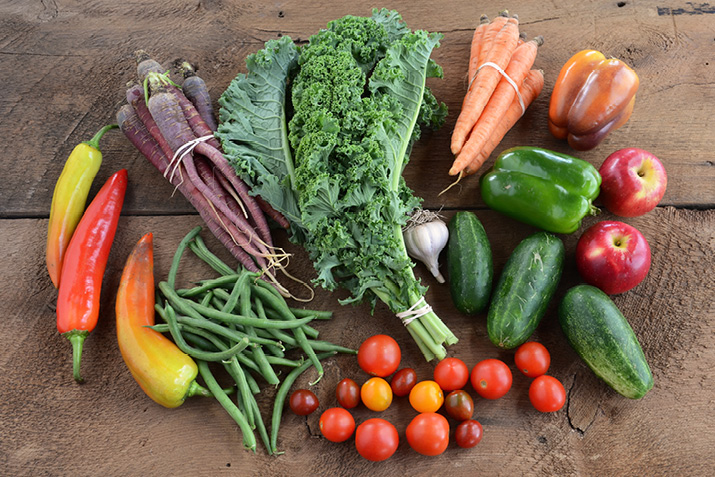
While some people take this all the way and eat only plants, (and that’s great too), Michael Pollan’s just saying that a plant-based diet is the best diet. Plant foods are the richest, most bountiful sources of vitamins and minerals as well as fiber. They contain hundreds of thousands of phytochemicals, and many of these contain disease-fighting properties that a laboratory can’t duplicate. Just about anybody can add more plants to their plate. Add a fruit to breakfast, a leafy green and one other vegetable to lunch, and a leafy green and three other vegetables to dinner. Plus, whatever else you want to eat, because it’s your dinner, and you should enjoy it.

So why not jump in? Just do a little better than you did yesterday. It’s not so hard when you recognize that you don’t have to be perfect. Michael Pollan doesn’t expect you to be perfect, and he’s not judging you. He can’t even see you. I promise. Just try to eat as much real food as you can, and try not to eat too much of it, and try to eat mostly plants. It’s easier than you think and the more you do it, the easier it gets.

Source: https://www.grocery.coop/food-lifestyle/michael-pollan-three-simple-rules-for-eating

(dev) Michael Pollan: Three Simple Rules for Eating

By: Eve Adamson

Is Michael Pollan America’s sweetheart? People love to talk about his pithy pronouncements on how we should eat. At least where I live, he’s the subject of many a conversation at parties, in bars, in restaurants, in book groups. People mention him with reverence. He’s like a 21st-century E.F. Hutton. When Michael Pollan speaks…people listen. When he gives lectures, it’s standing room only. Food and diet book writers quote him constantly, and some even admit that he’s their celebrity crush.

I’ve seen him speak, and while he’s articulate and intelligent, he’s no George Clooney. I wasn’t weak in the knees or anything. I suspect his wide appeal is probably an indication of how confused everybody is about food, and how much we love it when people make it very clear to us what we should and shouldn’t eat.

Then again, if this is true, why is it that, once we know how to eat, we don’t do it? One of Michael Pollan’s most famous quotes is a simple one, but it tells you everything you ever need to know about eating. Practicing it would render weight-loss diets irrelevant, positively impact the environment, champion local food producers, and bring the processed food industry to its knees. You’ve probably heard it before. You may have even quoted it to your friends. It’s just this:

“Eat food. Not too much. Mostly plants.”

So simple, so clean, so memorable…and so hard to do! But why? What’s so difficult about embracing these three uncomplicated concepts, when they could have such a positive effect on personal and global health? Let’s break it down. Maybe we can find some answers.

Eat food.

When Michael Pollan says, “Eat food,” what he means is, “Eat real food,” as in food that is unprocessed and doesn’t come from a factory. It sounds so simple, and yet, when you look at the snack you’re about to eat, it can be difficult to decide whether or not Michael Pollan (should he suddenly burst into your kitchen) would sign off on it as food.

Is Greek yogurt mixed with bran cereal and raisins food? Although the components of this snack come in packages and could be considered processed, of course, it's food. Arguably, an organic apple and a handful of raw walnuts might be more "real." But in our current, complicated world, “food” exists on a spectrum, from just-out-of-the-garden to "is-that-actually-edible?" If you’re too strict with yourself about, say, packaging or processing, you probably won’t stick to your resolve when hunger hits and your fresh produce has rotted in your crisper and all you can find to eat is something that comes in a package.

So what to do? Eat the foods you want to eat that are, in general, closest to the way you might encounter them at their source. Instead of always making the best choice, just make the better choice. Greek yogurt looks a lot more like milk than bright orange chips look like an ear of corn. I think Michael Pollan would agree.

Not too much.

Wouldn’t it be funny if everybody decided to practice these three words and just stop eating too much?  The diet industry would collapse! (Wait, that wouldn’t be funny. I write diet books for a living, so I’d be out of a job!) Unfortunately eating “not too much” is a lot harder than it sounds.

We’re biochemically primed to eat, and to enjoy it. While this biochemistry undoubtedly led us to a more balanced diet when we were hunters and gatherers, it doesn't necessarily lead us to great eating in today's world. When we eat too many simple carbohydrates, we get a blood sugar spike, and then an insulin spike and a blood sugar crash, and the result is that we’re hungry again, even though we just ate. Many processed foods kick-start this reaction, making moderation and portion control goals seem insurmountable. So what’s an aspiring Pollan fan to do?

Two things. First, eat some protein with every meal and snack, especially if you're also eating starchy or sugary foods like bread, pasta, or fruit. This won’t necessarily stop you from overeating ever again, but it will help slow the blood sugar roller coaster, dulling that frantic “gotta eat more” feeling. With breakfast, add an egg, some tofu, yogurt, or some protein powder (in a smoothie or your oatmeal). Add nuts, cheese, or a little bit of meat to your snacks. The same goes for lunch and dinner. Beans, lentils, peas, lean meats, low-fat dairy products…you don’t have to overdo it (but make sure it’s always there).

Second, switch most or all of your grain foods to whole grains. Whole grain breads, pastas, cereals, and snack foods contain more fiber and nutrients, so you’ll be satisfied with less. Protein + wholegrain = eating “not too much,” without feeling deprived. We can do that, right?

Mostly plants.

Don’t worry. Michael Pollan doesn’t want you to live on lettuce alone. He knows how much you love him, and he wants you to be happy. All he’s saying with his “mostly plants” advice is that we can benefit from eating more plant foods, aka vegetables and fruits and whole grains—you know, food (see item #1).

While some people take this all the way and eat only plants, (and that’s great too), Michael Pollan's just saying that a plant-based diet is the best diet. Plant foods are the richest, most bountiful sources of vitamins and minerals as well as fiber. They contain hundreds of thousands of phytochemicals, and many of these contain disease-fighting properties that a laboratory can’t duplicate. Just about anybody can add more plants to their plate. Add a fruit to breakfast, a leafy green and one other vegetable to lunch, and a leafy green and three other vegetables to dinner. Plus, whatever else you want to eat, because it’s your dinner, and you should enjoy it.

So why not jump in? Just do a little better than you did yesterday. It’s not so hard when you recognize that you don’t have to be perfect. Michael Pollan doesn’t expect you to be perfect, and he’s not judging you. He can't even see you. I promise. Just try to eat as much real food as you can, and try not to eat too much of it, and try to eat mostly plants. It’s easier than you think and the more you do it, the easier it gets.

Source: https://coopmigrate.s3btech.in/article/michael-pollan-three-simple-rules-for-eating

(dev) Florida’s Natural

By:Co+op\n

Cooperatively Owned Business

What makes us different? Well, for one thing, everything. We’re a citrus co-op with roots deep in the Florida soil, where we care for our trees, our fruit, our land and each other. We’re not looking out for number one. We’re looking out for everyone. It’s in our nature to work together. We are the farmers and families of Florida’s Natural. And we’re proud to bring you the most delicious, highest-quality juice you can find.
 
Look for great deals on cooperatively owned brands and products in our Co+op Deals flyers!


Source: https://coopmigrate.s3btech.in/testing/floridas-natural

(prod) Florida’s Natural

By:

Cooperatively Owned Business

What makes us different? Well, for one thing, everything. We’re a citrus co-op with roots deep in the Florida soil, where we care for our trees, our fruit, our land and each other. We’re not looking out for number one. We’re looking out for everyone. It’s in our nature to work together. We are the farmers and families of Florida’s Natural. And we’re proud to bring you the most delicious, highest-quality juice you can find.
 
Look for great deals on cooperatively owned brands and products in our Co+op Deals flyers!


Source: https://www.grocery.coop/article/floridas-natural

(prod) Banana Beet Muffins

By: Co+op

Recipe Information

Total Time: 35 minutes; 15 minutes active

Servings: 12

Beets may not be top of mind as a muffin ingredient, but they lend natural sweetness and beautiful color to these tasty gems.

Ingredients

  • 1 1/2 cups whole wheat pastry flour
  • 1/2 cup rolled oats
  • 2 teaspoons baking powder
  • 1 teaspoon baking soda
  • 1/2 teaspoon salt
  • 1/2 teaspoon nutmeg
  • 1/2 teaspoon cinnamon
  • 1/2 cup mashed banana
  • 1/2 cup vegetable oil
  • 1/2 cup maple syrup
  • 3 large eggs
  • 2 cups grated beets, peeled

Preparation

  1. Preheat oven to 375°F. Line a 12-cup muffin tin with muffin papers.
  2. In a large bowl, combine flour, oats, baking powder, baking soda, salt, nutmeg and cinnamon.
  3. In a separate bowl combine banana, oil, maple syrup and eggs. Stir until smooth.
  4. Stir the banana mixture into the flour mixture until just mixed, then stir in beets. Scoop 1/3-cup portions of batter into muffin tins, and bake for 18–20 minutes. Test with a toothpick inserted in muffins. If the toothpick emerges with wet batter, bake an additional 5 minutes. Remove from pan and let cool before serving.

Serve these unique muffins with some nut butter or jam for a veggie-rich breakfast or snack.

Nutritional Information

200 calories, 11 g. fat, 55 mg. cholesterol, 280 mg. sodium, 24 g. carbohydrate, 2 g. fiber, 4 g. protein

Source: https://www.grocery.coop/recipes/banana-beet-muffins

(dev) Banana Beet Muffins

By: Co+op

Recipe Information

Total Time: 35 minutes; 15 minutes active

Servings: 12

Beets may not be top of mind as a muffin ingredient, but they lend natural sweetness and beautiful color to these tasty gems.

Ingredients

  • 1 1/2 cups whole wheat pastry flour
  • 1/2 cup rolled oats
  • 2 teaspoons baking powder
  • 1 teaspoon baking soda
  • 1/2 teaspoon salt
  • 1/2 teaspoon nutmeg
  • 1/2 teaspoon cinnamon
  • 1/2 cup mashed banana
  • 1/2 cup vegetable oil
  • 1/2 cup maple syrup
  • 3 large eggs
  • 2 cups grated beets, peeled

Preparation

  1. Preheat oven to 375°F. Line a 12-cup muffin tin with muffin papers.
  2. In a large bowl, combine flour, oats, baking powder, baking soda, salt, nutmeg and cinnamon.
  3. In a separate bowl combine banana, oil, maple syrup and eggs. Stir until smooth.
  4. Stir the banana mixture into the flour mixture until just mixed, then stir in beets. Scoop 1/3-cup portions of batter into muffin tins, and bake for 18–20 minutes. Test with a toothpick inserted in muffins. If the toothpick emerges with wet batter, bake an additional 5 minutes. Remove from pan and let cool before serving.

Serve these unique muffins with some nut butter or jam for a veggie-rich breakfast or snack.

Nutritional Information

200 calories, 11 g. fat, 55 mg. cholesterol, 280 mg. sodium, 24 g. carbohydrate, 2 g. fiber, 4 g. protein

Source: https://www.grocery.coop/recipes/banana-beet-muffins

(prod) Sheet Pan French Toast

By: Co+op

Recipe Information

Total Time: 45 minutes; 15 minutes active

Servings: 3-4

Instead of standing over the stove turning slices of French toast, try this baked version. By spreading brown sugar and butter in the baking pan, the French toast makes its own caramel topping. You won’t need syrup!

Ingredients

  • 4 large eggs
  • 1 cup milk
  • 1 teaspoon vanilla
  • 1/2 teaspoon cinnamon
  • 1/4 teaspoon salt
  • 6 slices sliced whole wheat bread
  • 1/2 cup light brown sugar
  • 1/4 cup unsalted butter

Preparation

  1. In a medium bowl, whisk the eggs, milk, vanilla, cinnamon and salt. Place the slices of bread in a single layer on a 10-by-15-inch baking sheet and pour the egg mixture evenly over the bread, coating each slice. Cover and refrigerate for at least 1 hour or overnight.
  2. Preheat the oven to 375 F. In a small pot (or medium bowl in the microwave), melt the butter. Stir in the brown sugar. Dollop the mixture on another 10-by-15-inch-baking pan and spread with the back of a spoon where the toast will be placed.
  3. Carefully turn over each slice of bread and place on the buttered pan.
  4. Bake for 25 to 30 minutes, until the top of the toast is golden brown and the sugar is bubbling around the toast.
  5. Use a metal spatula to flip the pieces onto plates, sugar side up, and scrape any extra syrup on top of the toast.

Serving Suggestion

Serve with sausage or bacon and fresh fruit on the side.

Nutritional Information

490 calories, 24 g. fat, 290 mg. cholesterol, 600 mg. sodium, 53 g. carbohydrate, 2 g. fiber, 17 g. protein

Source: https://www.grocery.coop/recipes/sheet-pan-french-toast

Creamy Potato and Greens Soup (prod)

By: Co+op

Recipe Information

Total Time: 40 minutes: 25 minutes active

Servings: 6


Is there anything more comforting than a steaming bowl of creamy potato soup? We like to leave the skins on for texture and puree part of the potatoes to thicken the soup. Hearty kale turns meltingly soft in the soup, and a garnish of buttery arugula adds even more green goodness.


Ingredients

  • 1 tablespoon butter
  • 1 tablespoon extra virgin olive oil
  • 1 large onion, chopped
  • 2 pounds Yukon Gold potatoes, cubed
  • 1 bunch kale
  • 4 cups vegetable stock
  • 1/2 cup white wine
  • 1 cup half and half
  • 1 teaspoon dried dill
  • 1/2 teaspoon salt
  • 1/2 teaspoon cracked black pepper
  • 5 ounces arugula
  • 1 tablespoon butter
  • 1 pinch salt


Preparation

  1. In a large pot, heat the butter and oil over medium heat, then add the onion. Saute, lowering the heat as the onions soften. When they are golden, after about 10 minutes, add the potatoes. Strip the leaves from the kale and chop the stems, then add the stems to the saute.
  2. Add the stock and wine and bring to a boil. Cover the soup and reduce the heat to a simmer. Cook for about 10 minutes, until the potatoes are tender but not falling apart. Scoop out 2 cups of the potatoes and kale stems and put in the food processor. Puree until smooth, then blend in the half and half. Reserve.
  3. Chop the kale leaves and add to the potatoes in the pot, and cook for about 5 minutes, until tender. Add dill, salt and pepper. When the soup is hot, stir in the pureed potatoes.
  4. Melt the remaining butter in a saute pan over medium heat, then add the arugula and a pinch of salt. Stir and turn until wilted.
  5. Serve soup in bowls and garnish with the sauteed arugula.


Serving Suggestion

Want to take this soup over the top? Add a sprinkle of chopped bacon and shredded cheddar on top before serving.


Nutritional Information


320 calories, 11 g. fat, 25 mg. cholesterol, 590 mg. sodium, 46 g. carbohydrate, 5 g. fiber, 8 g. protein


Source: https://www.grocery.coop/recipes/creamy-potato-and-greens-soup