You are the reason food co‑ops are here
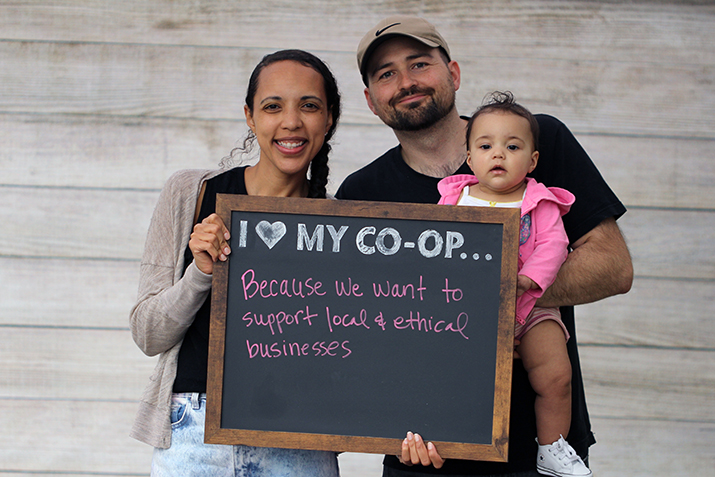
Food co-ops were formed by people in your community who wanted access to healthy, delicious food with reduced environmental impact and less waste, and co-ops remain community-owned and operated to this day. You help co-ops continue this proud tradition every time you choose to shop at one, invest in ownership or tell a friend about your local food co-op. You are the co-op difference.
Thanks to co-op shopper support, local farmers and producers continue to have a market for their delicious food, organic agriculture continues to grow, local food pantries and nonprofit organizations have a strong partner and together we are making progress towards a fairer food system.
People like you make it happen. When you shop at the co-op, your money makes a bigger impact in your local community than at a typical grocery store. At the co-op, your food dollars work to support a robust local economy, a vibrant community and a healthy environment.
When you shop the co-op, you cast a vote for a robust local economy, a vibrant community and a healthy environment.
You help create a robust local economy

When you buy local products, more money stays in your local community, making it more economically resilient and sustainable. Co-op shopper are supporting local entrepreneurs and small businesses and are making a difference!
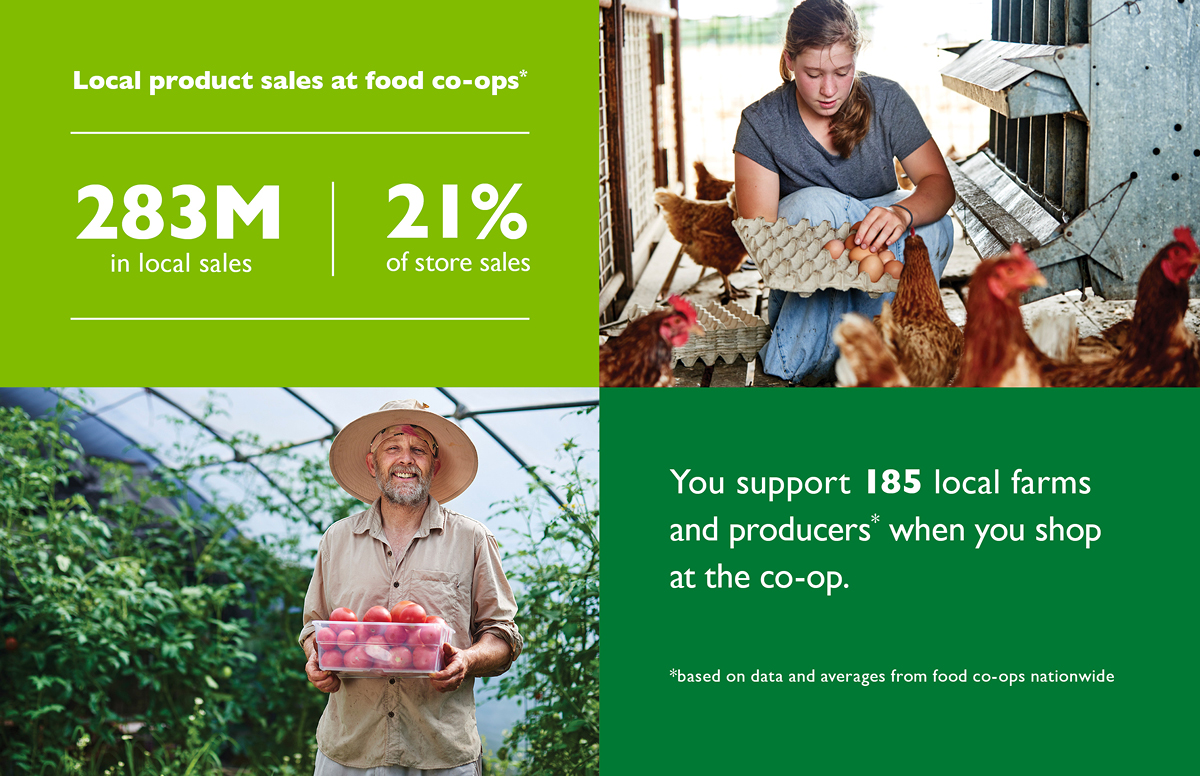
When you shop the at co-op, you are supporting local farmers and producers as well as investing in supply chain transparency. We have made a commitment to empowering entrepreneurs and small business owners in our area by bringing their products to market — but shoppers are the ones who keep them in business. Local products at food co-ops around the country average 21% of total co-op sales, compared with a national grocery store average of just 1.8%.
A stronger local economy is just one benefit. It’s easy to support local producers; their products are delicious! Co-op shoppers’ demand for the good stuff results in the average food co-op being able to work with 185 local farms and producers, resulting in over $283 million in combined sales of local products at co-ops nationwide.
In an increasingly consolidated food system, it’s difficult to know where your food is coming from, let alone who is getting paid to grow, pack, ship and stock it. When you buy local products you are creating local jobs and can easily see who benefits from your purchases.
You help grow a healthier environment
Organic agriculture supports the health of our planet. Organic farming methods are more sustainable and have been identified as a key way to slow down climate change. Whether you buy one organic product or many, you are part of the solution!
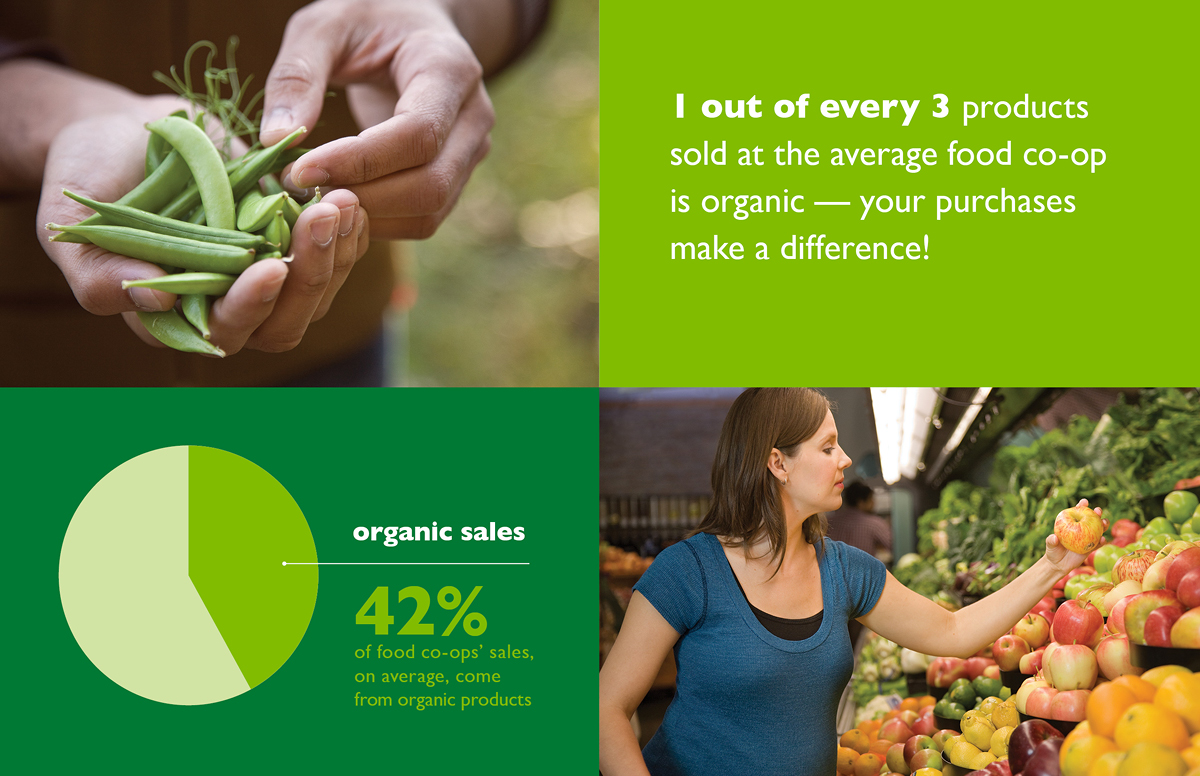
Whether you buy a few organic products or many, that purchase helps support the current and future health of our planet. Organic farming methods have been scientifically validated as being not only more sustainable, but a potential answer to some of our most pressing environmental problems. On average more than 33% of the products co-ops carry are USDA Certified Organic and represent 42% of a co-op’s total sales, compared with a national grocery store average of just 5%.
Certified organic food by law cannot be grown using toxic pesticides, synthetic fertilizers or GMO seeds. Beyond the benefit to individual shoppers is the positive impact organic agriculture has on natural systems. Organic methods are supportive of all levels of life from soil microbes to pollinators to the health of farm workers in the fields.
Nationwide, co-op shoppers demonstrate an inspiring commitment to the environment, with organic sales at co-ops totaling over $415 million annually.
You help to tackle food waste
Co-op shoppers support the production of fresh, organic veggies, free range meats, pastured dairy, wholesome deli and baked goods; food co-ops make sure as little gets wasted as possible.
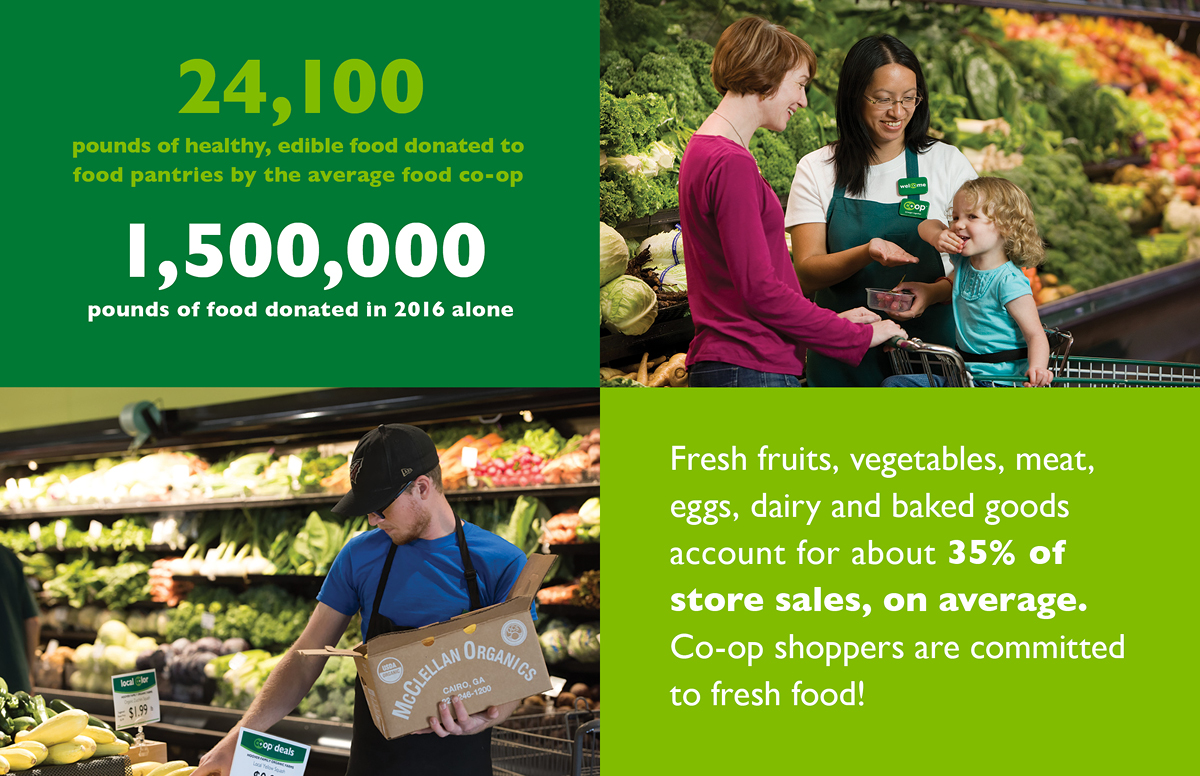
Co-op shoppers love to eat fresh, with sales of fresh (perishable) foods at co-ops representing 35% of total sales, slightly more than your typical grocery store (32%). Co-op shoppers support the production of fresh, organic, locally grown vegetables and fruits, humanely raised and grass fed meats, free range eggs, pastured dairy, wholesome deli food and bakery items, artisan breads and cheeses. Who’s hungry?
The flip side of all that fresh goodness is that food spoilage is a perennial challenge for the food industry. Diverting food from the landfill is the key, and co-ops tackle that through donations to food pantries, composting and better utilization of cooking scraps.
Nationally, the average food co-op is donating 24,100 pounds of healthy, edible food to food pantries annually, with a total of more than 1.5 million pounds of food donated in 2016 alone. Similarly sized grocery stores divert an average of 12,500 pounds, about half of what co-ops do.
You help bring people together
You don’t have to be an owner to shop the co-op — but ownership is empowering and everyone is welcome. Co-op shoppers are investing in a better way of doing business.
As a co-op shopper, you can choose to invest in ownership. You don’t have to be an owner to shop at the vast majority of food co-ops, but ownership is economically empowering and gives you a voice in how the co-op is run. Everyone is welcome to own a share of the co-op.
Democratically elected boards govern with guidance from seven international cooperative principles that apply to all cooperative businesses. These principles are designed to help directors and managers of the co-op make decisions based on a commitment to economic and social justice and equity for all stakeholders. Crucial among these is voluntary, open ownership without discrimination based on gender, social, racial, political or religious identification.
The principles that guide co-ops are in many ways responsible for the inspiring community, economic and environmental impact that sets us apart from conventional grocers. It is because of owner commitment to this vision and these values that a better way of doing business is possible.
You help to nurture community
Co-op shoppers support the work of local organizations that are dedicated to making a better world for us all. Co-op shoppers are improving local communities nationwide!
Co-op shoppers are incredibly generous — in 2016, food co-ops contributed over $2.6 million to charitable causes in their local communities, in both cash and in-kind donations, thanks to shoppers’ patronage and continued support of charitable programs.
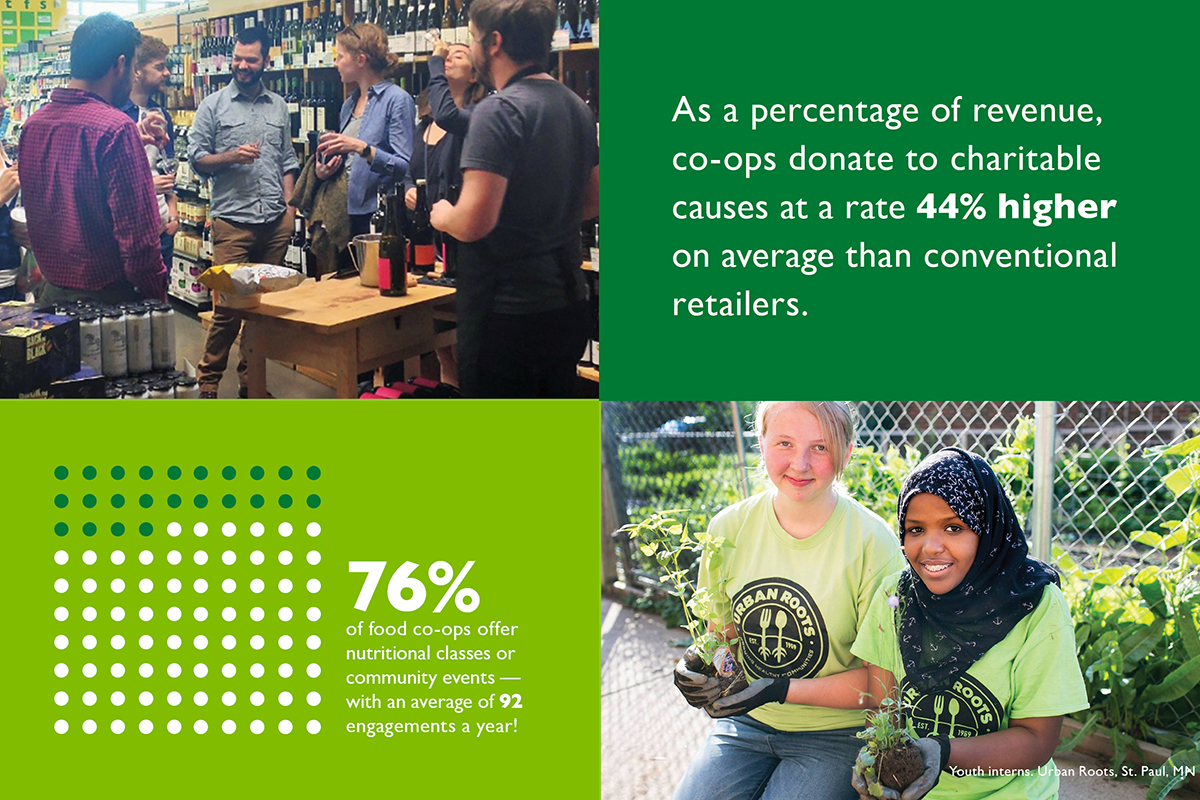
As community-owned and operated organizations, co-ops are able to ensure that a higher percentage of revenue is donated than at typical grocery stores, a 44% higher rate on average, to be exact! Co-ops offer a variety of ways for owners and customers to donate to community organizations, whether by voting on recipients at the annual meeting or by providing customers the option of “rounding-up” purchases to the nearest dollar at the register, earmarked as a donation.
Co-op shopper support also makes it possible to provide nutritional education, classes and community events at co-ops nationwide. With an average of 92 outreach events per co-op each year, there is almost always something going on!
You help to grow fair trade business
When you purchase fair trade products, you are contributing to the improvement of people’s lives. Thanks to co-op shopper support, co-ops are one of the best places to find fair trade products in the United States.
At the co-op, you can choose to purchase fair trade certified versions of products you love like coffee, tea and chocolate. Fair trade certification means that the producers are getting a fair price for their products and their labor.
Co-ops sell a higher percentage of fair trade products than other natural and organic products grocery stores, and co-op shoppers’ support of fair trade is huge. Combined co-op sales of fair trade products nationally top $32 million annually.
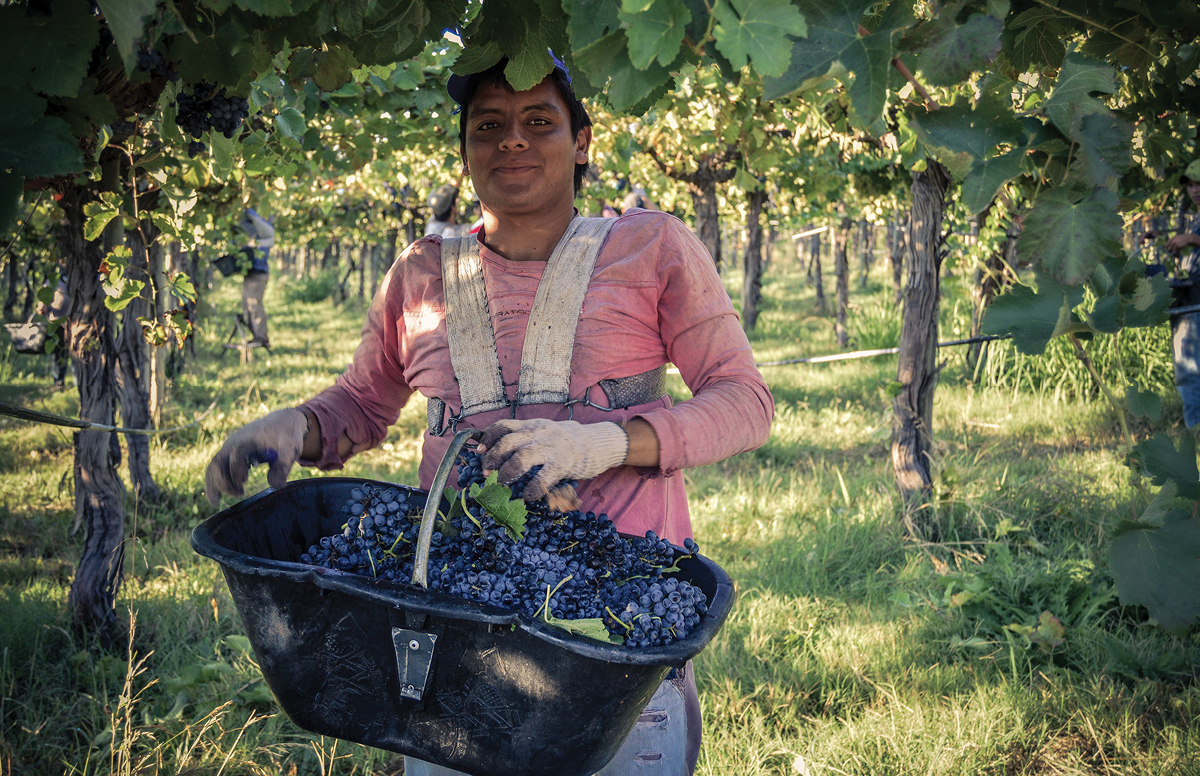
Co-ops across the country routinely work together to raise awareness about and increase support for the great things fair trade businesses are accomplishing. In 2016, co-op shoppers raised over $80,000 for La Riojana Cooperative in Argentina, whose fair trade organic olive oil and wines are exclusively available at co-ops. Co-op shopper support is helping family farmers attain organic certification for their vineyards and improve operations.
You help to support sustainable solutions
Co-op shoppers demonstrate a deep concern for the environment. Co-ops take this commitment seriously and are working together to take on some of today’s biggest challenges. Co-op shoppers are at the center of what makes the co-op difference!
Since 2012, food co-ops have been working together to offset a portion of greenhouse gas emissions associated with business travel and utilities by growing a Co+op Forest in the Peruvian Amazon.
The idea behind this unique carbon offset program is simple: food co-ops, directly and through their national co-op, calculate their annual carbon emissions (from business travel, utilities, etc.), then fund the planting or protection of a corresponding number of trees to absorb (offset) that carbon. When trees naturally absorb carbon dioxide — a greenhouse gas — from the atmosphere, it effectively slows the rate of climate change.
As of 2016, Co+op Forest is home to an estimated 1.4 million trees, which will offset 2,738 metric tons CO2e within their lifetimes. We are proud to report that due aCo+op Forest resides was honored as a UNESCO Biosphere Reserve, to serve as a model of sustainable communities.
About this content
This content is based on a 2017 study commissioned by National Co+op Grocers and conducted by the ICA Group, a not-for-profit consulting firm with expertise in cooperatives, economic development and business research.
Our co-op is a member of National Co+op Grocers, (NCG)—the organization behind this site—a business services cooperative for retail food co-ops located throughout the United States. NCG represents 147 retail food co-ops operating over 200 stores in 38 states with combined annual sales over $2.1 billion and over 1.3 million consumer-owners.
As part of an ongoing commitment to demonstrate the value of the cooperative business model to local communities, NCG began measuring the social, environmental and economic impacts of food co-ops in 2012 compared to conventional grocers.
A PDF version of this content is available in booklet format.
Check out the results of our 2012 food co-op imact study, Healthy Foods, Healthy Communities, which includes a video and infographics.



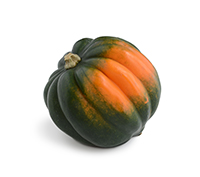 This forest green, deeply ribbed squash resembles its namesake, the acorn. It has yellow-orange flesh and a tender-firm texture that holds up when cooked. Acorn’s mild flavor is versatile, making it a traditional choice for stuffing and baking. The hard rind is not good for eating, but helps the squash hold its shape when baked.
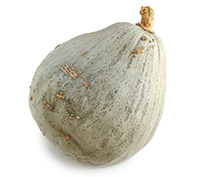 Good for feeding a crowd, these huge, bumpy textured squash look a bit like a giant gray lemon, tapered at both ends and round in the middle. A common heirloom variety, Blue Hubbard has an unusual, brittle blue-gray outer shell, a green rind, and bright orange flesh. Unlike many other winter squashes, they are only mildly sweet, but have a buttery, nutty flavor and a flaky, dry texture similar to a baked potato.
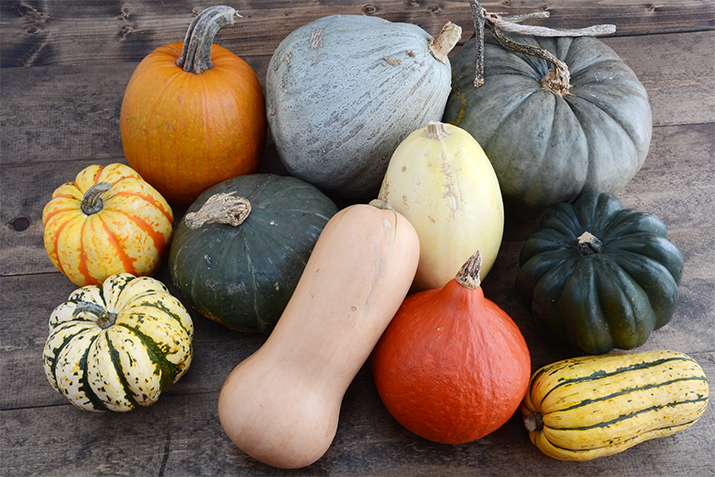
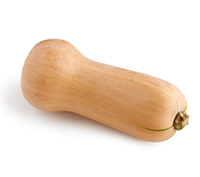 These squash are named for their peanut-like shape and smooth, beige coloring. Butternut is a good choice for recipes calling for a large amount of squash because they are dense—the seed cavity is in the small bulb opposite the stem end, so the large stem is solid squash. Their vivid orange flesh is sweet and slightly nutty with a smooth texture that falls apart as it cooks. Although the rind is edible, butternut is usually peeled before use.
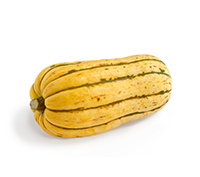 This oblong squash is butter yellow in color with green mottled striping in shallow ridges. Delicata has a thin, edible skin that is easy to work with but makes it a poor squash for long-term storage; this is why you’ll only find them in the fall. The rich, sweet yellow flesh is flavorful and tastes like chestnuts, corn, and sweet potatoes.
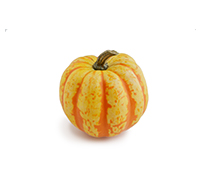 These colorful, festive varieties of squash are all hybrids resulting from a cross between Sweet Dumpling and Acorn, and are somewhere between the two in size. Yellow or cream with green and orange mottling, these three can be difficult to tell apart, but for culinary purposes, they are essentially interchangeable. With a sweet nutty flavor like Dumpling, and a tender-firm texture like Acorn, they are the best of both parent varieties.
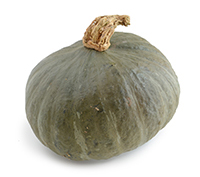 Kabocha can be dark green with mottled blue-gray striping, or a deep red-orange color that resembles Red Kuri. You can tell the difference between red Kabocha and Red Kuri by their shape: Kabocha is round but flattened at stem end, instead of pointed. The flesh is smooth, dense, and intensely yellow. They are similar in sweetness and texture to a sweet potato.
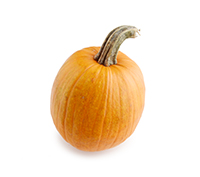 Pie pumpkins differ from larger carving pumpkins in that they have been bred for sweetness and not for size. They are uniformly orange and round with an inedible rind, and are sold alongside other varieties of winter squash (unlike carving pumpkins which are usually displayed separately from winter squash). These squash are mildly sweet and have a rich pumpkin flavor that is perfect for pies and baked goods. They make a beautiful centerpiece when hollowed out and filled with pumpkin soup.
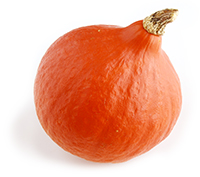 These vivid orange, beta carotene-saturated squash are shaped like an onion, or teardrop. They have a delicious chestnut-like flavor, and are mildly sweet with a dense texture that holds shape when steamed or cubed, but smooth and velvety when pureed, making them quite versatile.
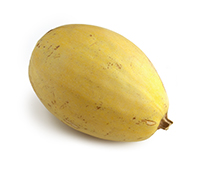 These football-sized, bright yellow squash are very different from other varieties in this family. Spaghetti squash has a pale golden interior, and is stringy and dense—in a good way! After sliced in half and baked, use a fork to pry up the strands of flesh and you will see it resembles and has the texture of perfectly cooked spaghetti noodles. These squash are not particularly sweet but have a mild flavor that takes to a wide variety of preparations.
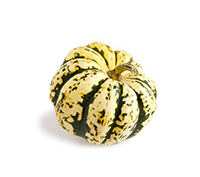 These small, four- to-six-inch round squash are cream-colored with green mottled streaks and deep ribs similar to Acorn. Pale gold on the inside, with a dry, starchy flesh similar to a potato, these squash are renowned for their rich, honey-sweet flavor.
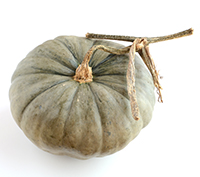 At some food co-ops, farmer’s markets, and apple orchards in the fall you may encounter unusual heirloom varieties of squash that are worth trying. If you like butternut, look for Galeux D’eysines, a rich, sweet and velvety French heirloom that is large, pale pink, and covered in brown fibrous warts. You might also like to try Long Island Cheese squash, a flat, round ribbed, beige squash that resembles a large wheel of artisan cheese. If you prefer the firmer, milder Acorn, you might like to try long Banana or Pink Banana squash. If you like a moist,dense textured squash (yam-like), try a Queensland Blue or Jarrahdale pumpkin. These huge varieties are from Australia and New Zealand, respectively, and have stunning brittle blue-green rinds and deep orange flesh. Both are good for mashing and roasting.