Good Eating Can Be Fun!

By: Eve Adamson

I’ve been duped.

For years, I’ve read that if only parents would expose kids to more vegetables, they would eat them and like them. Veggies would be as desirable as candy, chips, and fast food. I’ve lamented my failure to present my own kids with enough healthy choices during their most impressionable years. That must explain why, as teenagers, they spend their hard-earned money on fast food when I’m not looking (I see those colorful wrappers and soda cups in the trash—I’m totally on to them!). If only I’d made more home cooked dinners in the early days! If only I’d filled their toddler plates more often with broccoli puree and rutabaga cubes! Then they would surely prefer carrots to French fries and Brussels sprouts to burgers.

It was a lie—at least, partially.

Every time I feed my granddaughter, I fill her plate with healthy foods: benign, lovely things like blueberries, sweet potato fries, carrot/pear puree, and tiny bits of avocado. Every time, with every food—even fruit!—she unceremoniously turns up her nose and pushes the plate away, as if she has been deeply offended by the mere suggestion of  foods other than grilled cheese or plain quesadillas. She won’t even try a bite. She won’t even let a bite get near her. Mealtime is the context in which she learned how to assert herself with her favorite word: “uh-uh,” accompanied by a head shake (seriously, what kid doesn’t like fruit?). Now that I have a chance to make an early impact, I’m realizing that exposure isn’t everything, as my granddaughter has proven to me too many times.

This got me thinking: if a preference for healthy foods isn’t as simple as exposure (even repeated exposure—forget that “seven tastes and they will like it” theory when a child won’t even try something once), then what’s the trick? What might inspire a child to be a little more adventurous, and start to develop that broader palate we all hope for in our children?

I think “fun” is the trick. I think the answer is to take a little more time to make the good food, the real food, more fun. Why does fast food get the reputation as the “fun” food? What’s so fun about chemicals and fake ingredients? It’s backwards, and I think we can do something about it, but we have to go further than offering a vegetable and hoping for the best. Children might not think they like squash or spinach, but if vegetables weren’t so darned serious, if eating healthful food actually meant having a good time, then kids might be more inspired to take a taste, and one taste might lead to another, and another.

Here are ten ideas for making food fun

1. Make babies.

Baby vegetables are cuter, sweeter, and less intimidating than “grown-up” vegetables. Baby peas, baby beets, real baby carrots (the kind with greenery attached), baby (new) potatoes, baby Brussels sprouts, and baby greens look like they were made for kids. Offer veggies with the “baby” prefix and kids might give them a try, if only out of solidarity (little things need to stick together!).

2. Add butter.

At least to kids, who are more sensitive to bitter tastes, most vegetables taste better with butter and a dash of salt, or even a sprinkle of cheese. When you offer “buttery beans” or “cheesy broccoli,” formerly suspicious foods can feel more familiar and approachable.

3. Let your food touch.

Some kids don’t want their food to touch, but don’t assume anything. Just the other day, I fried up some bacon and scrambled it with eggs and some chopped onions and spinach leaves. I topped it all with cheese, and guess what who ventured a few bites? (I pretended not to notice.)

4. Pilfer from pop culture.

Bright yellow summer squash might take on the name of a certain square yellow fellow of cartoon fame. Your kids love a particular pop star? Apply his or her name—Randy Kaplan carrots, anyone? Raffi red cabbage? In our house, a certain children’s show featuring British aliens in red, blue, yellow, and green suits used to inspire the names of wholegrain toast with fruit faces and homemade strawberry custard.

5. Use humor.

Who says food can’t be funny? A study from Cornell University demonstrated that kids are much more likely to help themselves to veggies if they have humorous names, like X-ray Vision Carrots, Silly Dilly Green Beans, or Power Punch Broccoli (vegetables with silly names had double the takers in the study).

6. Get artistic.

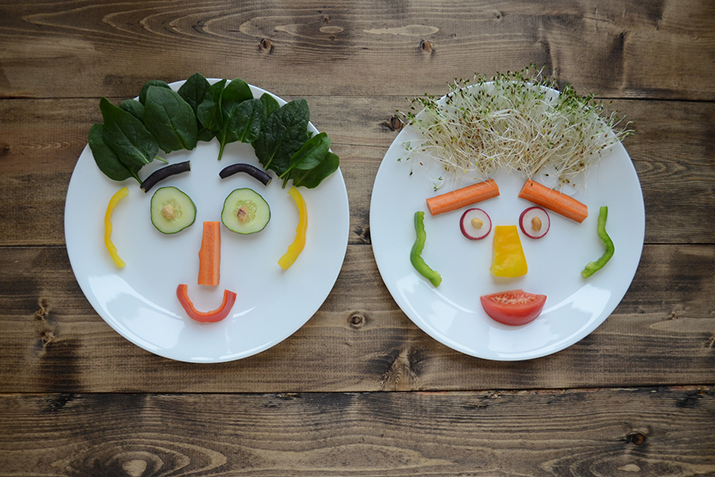
Make a plate into a “portrait” of your child made from vegetables (radish slices for eyes, a strip of yellow bell pepper or a nose, a tomato wedge for a smile, sprouts for hair?). What about a miniature nature scene with broccoli florets for trees over a bed of lettuce leaf “grass” with bits of shredded beets and red cabbage for flowers and a path of cucumber slices??

7. Go raw.

Roasting and stir-frying may make vegetables more appealing to grown-ups, but a lot of children prefer vegetables raw. Go beyond the old standards like carrots and celery. Try purple cauliflower florets, multi-colored bell pepper strips, cucumber half-moons, mild breakfast radishes, kohlrabi cut into sticks, shredded beets, and small tomatoes speared with toothpicks (different varieties come in yellow, orange, and green). A few raw veggies on the side in place of chips or fries might inspire some experimental crunching.

8. Get dippy.

As long as you’ve got out the raw vegetables, add something to dip them in. Dipping is fun! Ranch dressing is the old standby, but also try hummus, guacamole, mild salsa, French onion dip, even peanut butter. Or make your own in a rainbow of colors by mixing sour cream and sea salt with different vegetable purees (beets for pink, spinach for green, pumpkin for orange).

9. Play games.

The Tasting Game is fun and encourages bravery in the face of palate teasing.  At snack time, cover your child’s eyes and feed her small bites of different foods. Her job is to guess what they are. Kids get so distracted by the guessing, they forget to notice they are eating foods they might push away at the table. As kids get older make the guessing game harder. String beans: yellow, green, or purple? Bell peppers:  green, purple, red, or orange? Tomatoes: red, orange, yellow, or green?

10. Make it an event.

Healthful foods can be an adventure. Steam an artichoke, put out individual bowls of lemon butter, and make a family ritual out of pulling off the leaves and sliding them through your teeth, then peeling and cutting the heart and dividing it up between everyone. Who can collect the biggest pile of leaves? Grow cherry tomatoes in a planter or green peas on a trellis, then harvest the veggies with your child. Put on some calypso music and crack open a coconut together. Share the water and chunks of coconut meat. Take a weekly family field trip to the co-op and farmer’s market and let each child choose a veggie to serve with dinner. These are the traditions your children will remember, and the fun will rub off on your child’s perception of healthful food.

We all get rushed and life is busy, but if we take time for anything, it should be to bring more joy to the table. There’s nothing inherently serious about vegetables and other healthful foods, so slow down, get creative, and lighten up. Good eating really can be fun!
Source: https://www.grocery.coop/food-lifestyle/good-eating-can-be-fun

Growing Green Onions (Without a Garden)

By: Sarah Mandel

Sure, you say. I’d like to have a garden, but I don’t have a yard, I only have a window ledge, and my thumb is anything but green. How can I grow vegetables?

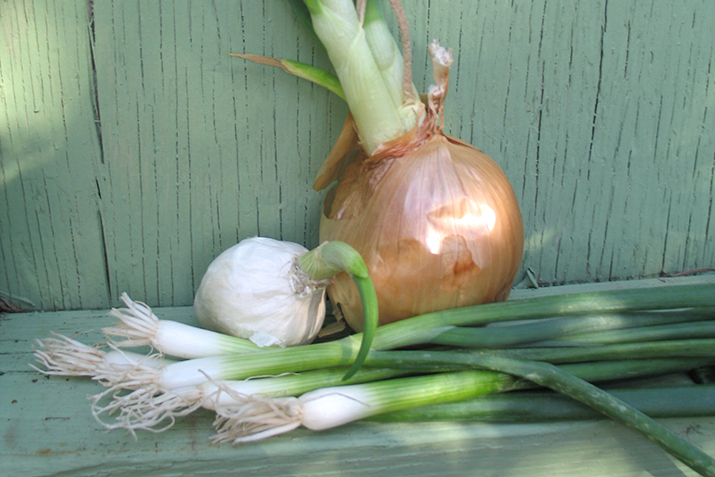
Let me introduce you to the most determined vegetable of them all, the onion. Onions are members of the allium family which means they have a bulb, a handy little storage chamber at the base of the stem and it’s the secret to the onion’s invincibility. These plants have a life wish!

Think of all those onions that sprouted in the fridge or on the counter—they drew on their reserves to grow new leaves, and that pointy green sprout, as we know from eating scallions, is just as delicious as the bulb, and a lot easier to grow.

Onions are a wonderful mix of green vegetable and condiment. A sprinkling of chopped green onion boosts flavor, presentation and nutrition of everything from mashed potatoes to enchiladas and pad Thai. Fresh green onions provide vitamins A and C, iron, calcium and fiber.

So what do you need to get started growing these gems?

  • A pot at least 6 inches deep and as wide as your space allows
  • Good quality potting soil
  • A bunch of young green onions or a bag of pearl onions from your local food store

Selecting Your Onions: Two Options for Onion Greens

Green Onions

Young green onions are sometimes called scallions, spring or salad onions, and can be found with the lettuces in the produce section. They are whole young plants grown from seed and harvested just as their bulbs and leaves become juicy. Unlike the larger onions over there by the potatoes these have not been allowed to mature and dry out; they’re teenage onions. Their fat little white roots should still be attached. The longer and more intact these roots are the faster the onions will grow again. Before you plant them, cut off and use their long green tops—trimming their tops is important to encourage new growth. Just be sure not to cut down into the white bulb itself.

Pearl Onions

Pearl onions, also called boiler onions, are a bit of a gourmet item. These miniature dried onions are just an inch or two in diameter and are often used for creamed onions or for roasting with meat or new potatoes. They may be white, yellow or even red. They usually come packed twenty or so in a nifty little mesh bag, but you might also find them in bulk at a farmers’ market. These will take a little longer than green onions to get started as they have to grow new roots. But because their bulb is larger they have the potential to make a healthy show of greenery to harvest and enjoy. Their tops are pointed and their roots are a brushy dried stubble.

Planting

To plant your onions, fill the pot half full with moist soil. Then arrange the onion plants or bulbs two inches apart with the root side down. Gently but firmly pack more soil around them until the trimmed top of the green onion is just peeking out or the bulbs are completely covered. Water well and add more soil if it settles and exposes the bulbs. Place in a sunny window (onions need about six to seven hours of light per day) or under a grow light, and be patient.

Keep the pots moist and in a few weeks you will have a crop of green onion tops to harvest. Once harvested they will grow more green tops and you can harvest them again and again. In fact now that you know the trick you can start onion pots as gifts for all your friends!

Source: https://www.grocery.coop/fresh-from-the-source/growing-your-own-food/growing-green-onions-without-a-garden

History of Co-ops

By: Co+op

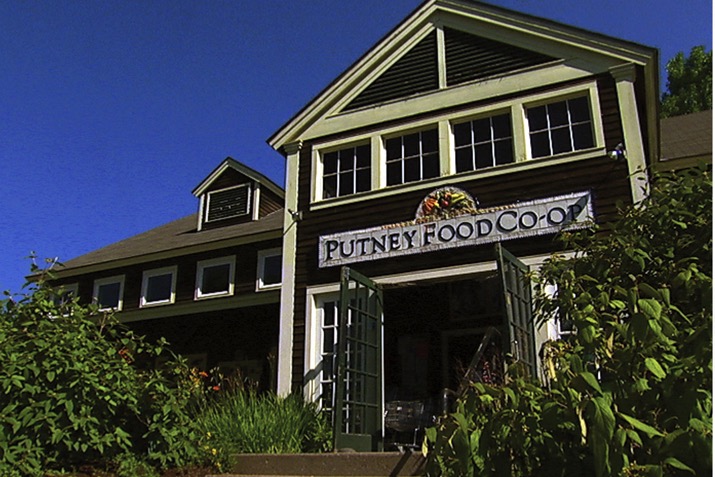
Putney Food Co-op (above) celebrated their 70th anniversary in 2012.

Cooperation is not new. Early human societies cooperated by sharing hunting, fishing, farming and shelter practices to improve their chances of survival.

Cooperatives began to take more formal shape in the late 18th century as people moved from farms to cities. No longer able to grow their own food, they relied on privately owned stores to provide nourishment. Often, the prices were high and the selection was limited.

As less powerful members of these new cities, the workers, consumers, farmers and producers banded together to gain economic clout. They improved their options through joint purchases of supplies and services, and kept their costs low. They answered to themselves, and when change was needed, it was made. They became a co-op—a business run by the people, for the people.

Want to take a deeper dive in to this history of co-ops? Read on or check out this video about the Rochdale co-op pioneers, commissioned for the Rochdale Pioneers Museum and Co-operative Heritage Trust.

A Deeper Dive into Co-op History

The following section was written by Karen Zimbelman, Development Director for National Co+op Grocers. Used by permission.

Early Co-op Origins

In early human societies, people learned to cooperate and work together to increase their success in hunting, fishing, gathering foods, building shelter, and meeting other individual and group needs. Historians have found evidence of cooperation among peoples in early Greece, Egypt, Rome, and Babylon, among Native American and African tribes, and between many other groups.

Early agriculture would have been impossible without mutual aid among farmers. They relied on one another to defend land, harvest crops, build barns and storage buildings, and share equipment. These examples of informal cooperation—of working together—were the precursors to the cooperative form of business.

The First Cooperatives

The earliest cooperatives appeared in Europe in the late 18th and early 19th centuries, during the Industrial Revolution. As people moved from farms into the growing cities, they had to rely on stores to feed their families because they could no longer grow their own food. Working people had very little control over the quality of their food or living conditions. Those with money gained more and more power over those without. Early co-ops were set up as a way to protect the interests of the less powerful members of society—workers, consumers, farmers, and producers.

In England consumers were frustrated by the abuses of store owners, many of whom adulterated products to increase their profits. In many cases, workers’ wages were paid in company chits—credit that could be used only at the company’s stores. The average consumer had very few choices and little control.

Groups of people began experimenting with various methods of providing for their needs themselves. They decided to pool their money and purchase groceries together. When they purchased goods from a wholesale dealer and then divided them equally among themselves, they were surprised at the savings and higher quality of products they were able to obtain.

The Rochdale Equitable Pioneers Society

In 1843 workers in the textile mills of Rochdale, England, went on strike. When the strike failed, the millworkers began to look for other ways to improve their lives. Instead of calling for another strike or asking charitable groups for help, workers decided to take control of one of the most immediate and pressing areas of their lives. They believed they needed their own food store as an alternative to the company store. Twenty-eight people founded the Rochdale Equitable Pioneers Society.

After saving money for more than a year, these pioneers opened their co-op store at 31 Toad Lane on a cold December evening in 1844. Although the founders agreed to sell just butter, sugar, flour, and oatmeal, they also offered tallow candles for sale that night. They were forced to buy candles because the gas company refused to supply gas for the new group’s lights. The founders bought candles in bulk and sold what they didn’t use to their members.

The Rochdale Pioneers weren’t the first group to try forming a co-op, but they were the first to make their co-op succeed and endure. To avoid the mistakes made by earlier co-op societies and to help others, they developed a list of operating principles governing their organization. This list formed the basis for what are now known as the cooperative principles. Rochdale is considered the birthplace of the modern cooperative movement.

Cooperation Grows in the United States

In the United States, cooperatives of one sort or another have roots going back to colonial times. Like their counterparts in England, these early groups experimented with ways to band together and gain economic clout.

From colonial times on, most early American co-ops were formed primarily for the benefit of farmers. Some co-ops helped farmers keep their costs low through joint purchases of supplies, such as feed, equipment, tools, or seed. Some marketing co-ops helped farmers obtain the best prices for their goods by combining their crops and selling in large quantities. Others, such as grain elevators or cheese-making co-ops, provided storage or processing services.

Consumer groups in the United States began taking note of the early British consumer co-ops and the success of American farmers who worked together. They began forming consumer protection associations.

Most early American co-ops failed due to insufficient capital (money invested by the owners), poor management, and a lack of understanding of the cooperative principles by their members. It wasn’t until the early 1900s that co-ops began to have true, long-lasting success in the United States.

Consumer Co-ops Make Waves

In rural and urban areas alike, consumer co-ops were first organized to provide consumers with control and to fight the unfair practices of private and company stores. Over the years, consumer co-ops have experienced waves of growth and development, followed by periods of decline.

Hanover Co-op Food Store
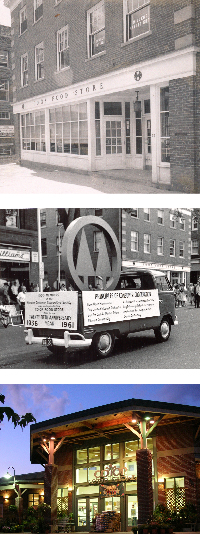
The Hanover Co-op: Co-op Food Store, Then and Now: Hanover’s first store on Main Street in Hanover, NH, in 1936 (top); Co-op Food Store celebrates its anniversary in 1961 (middle); Co-op Food Store, Lebanon, NY, in 2012, one of five co-ops in the Hanover Consumer Cooperative Society.

The first of these waves began in the early 1900s with what was called the Rochdale plan. Under this plan, consumers organized buying groups to purchase from a cooperatively owned wholesaler. The wholesaler would then gradually help these buying clubs convert their operations into retail outlets by supplying management, inventory, and capital. In 1920 there were 2,600 consumer co-ops in the United States—all but 11 were general stores—and 80 percent were in towns with populations of less than 2,500. Combined sales volume for these stores was about $260 million. Unfortunately, when the wholesalers began having problems due to rapid growth, the whole system crumbled, and most co-ops were closed within the decade.

The Great Depression of the 1930s triggered another great wave of co-op organizing in cities and rural areas.

Franklin Roosevelt’s New Deal supported the growth of urban co-ops. Some leading consumer co-ops were launched in this period—in Berkeley, Palo Alto, Eau Claire (Wisconsin), Hanover (New Hampshire), Hyde Park (a Chicago neighborhood), and Greenbelt (Maryland—a suburb of Washington, D.C.). All of these stores survived to their 50th anniversaries. But in the 1980s, the co-ops in Berkeley and Greenbelt closed. The Palo Alto Co-op closed in 2001. The co-ops in Hanover, Eau Claire, and Hyde Park continue to operate to this day.

In the late 1960s and 1970s, the “new wave” of consumer co-ops began. Born out of the ideas and philosophies of the 1960s counterculture, these stores were opened by young and idealistic members. They set up co-ops to fit their beliefs in equality, not to follow their co-op predecessors. Most of the new co-ops sold only whole, unrefined, and bulk foods. Their operating practices were diverse and experimental. Some stores had limited store hours, others were open seven days a week. Some were run by volunteers, others by fully paid staff. Some had various forms of worker self-management, others had more traditional management structures. Some paid year-end patronage refunds, others gave members a discount at the cash register.

These co-ops were pioneers in what came to be known as the natural foods industry. But not all were successful. Some failed because of their experimental structures and operating systems. Most were unable to escape the same problems that had troubled older, earlier co-ops—insufficient capital, inadequate membership support, an inability to improve operations as the natural foods industry developed, a stronger commitment to idealism than to economic success, the lack of adequate support from their wholesalers, and resistance to consolidation. But the “new wave” co-ops that survived are strong and well established. The consumer co-op movement in the United States has had mixed success—especially in contrast to consumer co-ops in Europe and Asia. But each wave of cooperative growth produces renewed enthusiasm for a time-tested idea and innovations that prove successful in the consumer marketplace.

Source: https://www.grocery.coop/food-coops/history-of-co-ops

Hunger Mountain Coop Climbs Towards Sustainability

By: Co+op

Just like organic vegetables and buying in bulk, for many food co-ops, environmental sustainability in how they operate is not a new idea. Hunger Mountain Coop, a community-owned natural foods cooperative in Montpelier, Vermont, is exemplary for its long-term commitment to running a sustainable store.

For the past forty-three (and counting) years, Hunger Mountain has considered the environmental impact of their business decisions and operations. “We don’t have something we call an official ‘sustainability program,’ really, those considerations have just always been a part of the co-op’s DNA,” says Mary Mullally, Hunger Mountain’s Facilities Manager. This informal commitment is nonetheless evidenced by the store’s recognition as a Vermont Green Grocery Environmental Leader, which means they have been chosen by the state as a an example of a business that goes beyond compliance with existing environmental regulations, using resource conservation strategies and implementing environmental best management practices.

In recent years, the co-op has made some innovative improvements in energy efficiency by targeting refrigeration and HVAC systems. According to the Environmental Protection Agency (EPA), addressing refrigeration efficiency is the most important thing a supermarket can do to improve their environmental impact. The co-op has reduced their need for refrigerant in the winter by installing a system that cools walk-in coolers during the winter by circulating in cold air from outside. Additionally, they’ve installed a heat reclamation tank that captures heat from their refrigeration system to preheat hot water used on-site.

With the help of the non-profit Efficiency Vermont, the co-op conducted an energy audit, which resulted in additional ideas for improving their energy use. Efficiency Vermont provided recommendations and expertise about what government rebates might be available to offset the costs of upgrades or renovations. Results of the audit included replacing fluorescent lighting with LEDs and further improving refrigeration efficiency. Nonprofits similar to Efficiency Vermont exist in most states across the United States and can assist businesses with similar audits.

As of January, 2015, Hunger Mountain Coop began formally tracking sustainability metrics such as electrical and propane usage, compost, recycling and trash quantities through Co+efficient, a national sustainability program offered by National Co+op Grocers (the organization behind this website). “We’ve already found Co+efficient to be helpful, especially in that we’re able to compare our store to others. If we notice that our electrical usage seems high, we can compare with other similar-sized stores in our region and find out how they are addressing the same challenges.” says Mullally. “Now that we have a year’s worth of data, we look forward to referencing it as a tool to further guide our decisions.” Hunger Mountain plans to continue its forty-plus year commitment to energy efficiency by pursuing solar energy credits in the future.

Source: https://www.grocery.coop/article/hunger-mountain-coop-climbs-towards-sustainability

Values in Action Everyday

By: Co+op

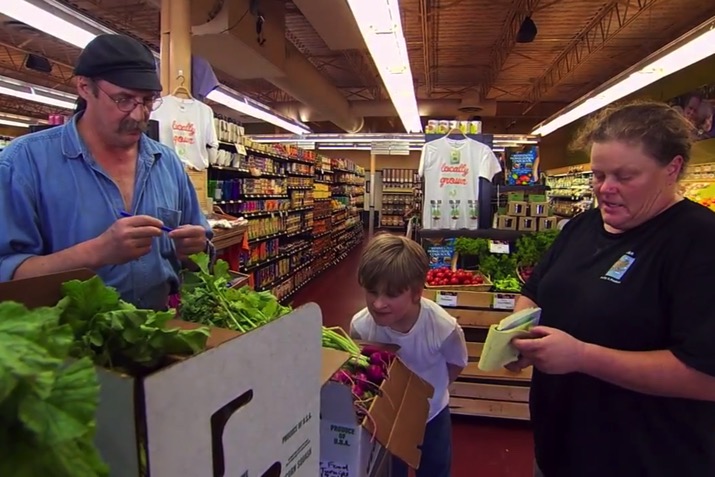
Poultry and Produce delivers goods to Just Food co-op. The co-op has a handshake agreement with the producer to purchase their products each season.

We are proud to be part of a movement that proves respecting people is good for business. Millions of consumers around the globe have joined cooperatives for many reasons, including finding that they fill a need for housing, electricity, food, insurance and financial services…the list is endless. What attracts people to cooperation is that their co-ops operate on their behalf with honesty, fairness and transparency—they are based on values not unlike those people aspire to for themselves: self-responsibility, democracy, equality, and social responsibility (www.ica.coop). In the United States, 30,000 co-ops provide two million jobs, and one of every four people is a member of a cooperative.

These values connect us. Co-ops foster real relationships with their customers by providing service rooted in community. It’s all about trust. For example, at Just Food Co-op in Northfield, Minn. they actively support and seek out local farmers such as L&R Poultry and Produce (see more about them in the Celebrity Farmers video), wherein they have a handshake agreement to buy their products each season. The farmers know that the co-op will keep its word, and Just Food shoppers can expect the highest-quality food grown with integrity. At food co-ops, it’s not uncommon for customers to know the real people who stand behind the products available.

Cooperative values also transcend co-op size. It doesn’t matter whether your cooperative is so large that it employs thousands of people, or so small you can fit everyone involved in a single room; co-op values remain the same.

The outdoor adventure retailer REI (Recreational Equipment, Inc.) is the largest consumer co-op in America with 17 million members. Their size allows them to act on their ideals in places all across the country. This has a big impact. In addition to adhering to the stated co-op values, they also take them one step further by actively protecting the environment. That’s what co-ops do. They strive to go above and beyond to do what’s right. At REI, how they operate their stores, the products they carry, and the millions of dollars they have donated to safeguard forests, lakes and prairies, have the end goal of preserving natural spaces and keeping the earth a better place for everyone.

The food co-ops that make up National Co+op Grocers (the organization behind this site) have over 1.3 million members across a “virtual chain” of 148 retail food co-ops nationwide. Collectively, food co-ops have a strong social and economic impact. They work with an average of 157 local farmers and producers (compared with 65 for conventional grocers). They contribute to the community with high levels of charitable giving, an average of 13% (compared to 4% for conventional grocers). Plus food co-ops generate more money for their local economy—1.5 times more than conventional grocers. Find more info on how food co-ops do things differently and the impact they have in our Healthy Foods, Healthy Communities post.

Co-ops demonstrate their commitment to ethics by extending them in an ever widening circle. When a co-op makes a profit, you can be assured it was gained through fair business practices, and in most cases, any surplus is reinvested in the co-op or shared equitably among member-owners.

Some of those co-op value circles start very small and grow into greater influence, changing lives in the process. In 2008 in Whatcom County in Washington state, four women got together to start the Circle of Life Caregiver Co-op. Theirs is a worker-owned health care co-op dedicated to excellent home care for the elderly and disabled. In an industry rife with low-pay and apathy towards clients, Circle of Life offers a refreshing alternative, where self-help provides everyone with more options.

We know none of the great things co-ops accomplish would be possible without the people worldwide who use co-ops to meet their needs.

Source: https://www.grocery.coop/voices-from-the-field/values-in-action-everyday

What’s in My CSA Pick-up?

By: Eve Adamson

Photo credit: Ben Minkler

Every Thursday afternoon, I drive to a warehouse space tucked away out of sight in a shady looking industrial area next to the railroad tracks. I go to meet my ‘connection.’ I bring an innocuous-looking green bag and make my way discreetly to a shady area against the building. Ah, there’s the stuff I need, the stuff I’ve been craving. I look around to see if anybody is watching. My source tells me to help myself because this stuff is primo. I mean like, grown within a few miles of town and picked that day.

These organic vegetables are the best I’ve ever seen!

This is my weekly habit, and I can’t get enough. It’s my CSA pick-up, and it keeps my family eating local, seasonal produce for most of the year. “CSA” stands for “community supported agriculture.” It’s a great way to support your local farmer. You pay the farmer a set amount of money at the beginning of the growing season, and then, throughout the summer (and sometimes throughout the spring and fall and even winter), you get to pick up a load of freshly picked veggies once a week. You never know what you’ll get, or how much. It all depends on what kind of a year the farmer is having. Your pick-up may be impacted by droughts or floods, hail or early frost, but many small farmers wouldn’t make it in the business without this community investment.

For my part, every week, it’s like I’m getting veggies for free because they are pre-paid, and I love the surprise and challenge of figuring out what to make out of my haul. However, using all the vegetables without letting anything go to waste has always been difficult for me. I hate having to throw a bag of tomatoes or a bunch of kale into the compost pile because I forgot to use them before they got too old. Therefore, this week, I challenged myself: Use every single veggie item in my CSA bag, without throwing away a single thing.

MY CSA bag

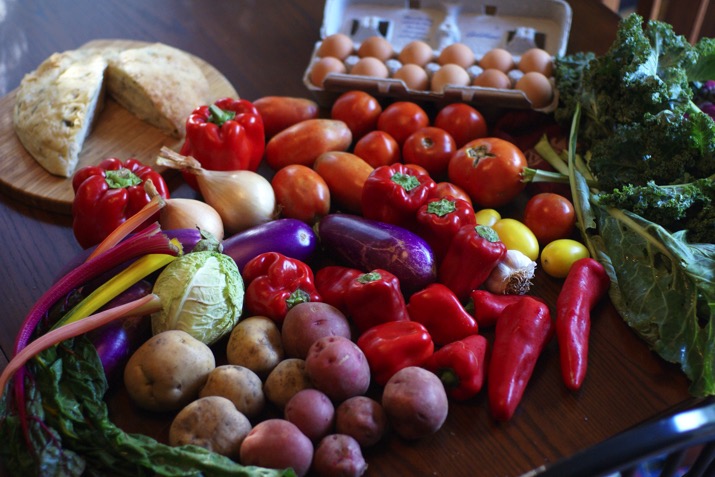
In order to complete my mission, I first had to plan. I laid everything out on the dining room table. This is what my CSA bag contained:

5 stalks rainbow chard
Bunch of kale
Bunch of collard greens
3 Japanese eggplants
2 yellow onions
1 head of garlic
3 Roma tomatoes
1 bag of small tomatoes
3 yellow plum tomatoes
1 large slicing tomato
1 small bag of assorted sweet peppers
4 large red bell peppers
1 small head of Chinese cabbage
5 yellow potatoes
6 red potatoes
1 dozen eggs
1 herbed focaccia

Next up: menu mapping

This involved a long Saturday morning drinking coffee with coconut milk and reading cookbooks. It was a tough job, but somebody had to do it. I not only marked recipes that included the ingredients I already had, but I marked those I know I will want to make in the future when, for example, the fall squashes begin to come in, or next spring when we get peas and Asian greens and asparagus.

After a quick trip to the co-op to buy the ingredients I would need to finish the recipes I chose (a jalapeno, some vegetable broth, cream and butter from a local dairy), it was time to start cooking.

First up: Saturday brunch

 (Who says brunch is just for Sundays?) With a dozen beautiful brown local eggs, obviously eggs were on the menu. I sauteed some of the chard and kale with one of the onions, two cloves of garlic, one large bell pepper, and 4 small tomatoes. I added eight beaten eggs and served this colorful dish with buttered slices of herbed focaccia (about a quarter of the loaf). Served four.

After this fortification, I dumped all the leftover vegetable trimmings into the compost pile and kept going.

Next on the menu: soup

For the soup, I chopped the remaining chard and collard greens and half the kale, and sauteed them in olive oil with three cloves of garlic. I added six of the small sweet peppers and a jalapeno pepper I already had in the fridge. Next, all the Roma tomatoes, the kernels cut from three remaining ears of sweet corn from last week’s pick-up (bonus points!); half a box of organic vegetable broth; a can of garbanzo beans; and a handful of chopped fresh basil from a friend’s garden. Salt, pepper, simmer until dinner (I could have also put it in the slow cooker).

While the soup simmered, I shredded the cabbage, drizzled it with apple cider vinegar, olive oil, and toasted sesame oil, a few dashes of soy sauce, and a handful of toasted sesame seeds. I packed this into glass jars and refrigerated it. For dinner, we had big bowls of hot soup with crusty slices of focaccia (another quarter loaf) and sesame coleslaw, along with a chicken from a local farm that I roasted for the meat eaters in the family.

On Sunday morning

I made a smoothie for breakfast using coconut almond milk, protein powder, 1 cup of frozen blueberries, and the rest of the kale. All greens officially used.

For Sunday dinner

I put a roast (from a local grass-fed beef farm) in the slow cooker with white onion slices, the rest of the sweet peppers, two cloves of garlic, and the rest of the red potatoes, quartered, plus a liberal dose of the oregano I had dried from a pick-up earlier in the month.  All sweet peppers officially used. I turned the slow cooker on high. Four hours until dinner.

Next, vegetable moussaka. First, I cooked and mashed the remaining potatoes with some olive oil. In two casseroles (one to serve, one to freeze for later), I layered eggplant slices, zucchini slices, a tomato puree cooked with brown lentils, and the mashed potatoes, and baked it until the mashed potato topping was golden brown. I plated the roast and arranged the slow cooker vegetables around it, then drizzled the meat juices over the top (fortified with a splash of Madeira wine and a dab of butter). Our hearty dinner: Moussaka, roast, a big salad, and the rest of the focaccia, buttered and toasted and sprinkled with the last two cloves of garlic, minced

Let’s see, what’s left? Just four eggs. A simple crème brulee for dessert took care of those.

Monday morning

I realized with pride and a little disappointment that I didn’t have a single item left. Not one veggie. Not one egg. Not one slice of bread. The only thing I’d thrown into the compost pile was the vegetable trimmings. Nothing wasted, leftovers for the week, and I did it all in two days.

This is what local eating looks like. Take an hour to plan, an hour to shop and organize, and devote some of your weekend time to cooking, and you’ll see it’s not difficult at all to prepare simple wholesome foods like soups, casseroles, eggs with vegetables, and smoothies, using all local foods. These kinds of foods are quick, easy, and don’t take much culinary skill. They are budget-friendly meals and they taste far superior to anything made with out-of-season vegetables at the grocery store. None of the dishes I made were complicated or any more time consuming than going out to a sit-down restaurant. They are all customizable for seasonal vegetables, and I know the money I’m spending on food stays right here in my own community.

If you don’t already participate in a CSA, why not give it a try? Challenge yourself to use your entire CSA pick-up, or farmer’s market basket, or co-op shopping bag full of local produce. Find recipes, in cookbooks or online, that use as many of your local, fresh ingredients as possible. Make big batches of food and freeze the leftovers. Because wasting these tasty local, organic vegetables is a crime—or it should be!

What will be in my CSA pick-up next week? Not knowing is all part of the fun. Will there be eggplant? Rainbow chard? Blue potatoes?  Brussels sprouts? A truckload of corn? Whatever it is, I’m ready. As soon as my “connection” shows up again, I’ll gather my cookbooks, pour myself a cup of coffee, and start planning.

Source: https://www.grocery.coop/fresh-from-the-source/whats-in-my-csa-pick-up

Winter Squash Guide

By: Co+op

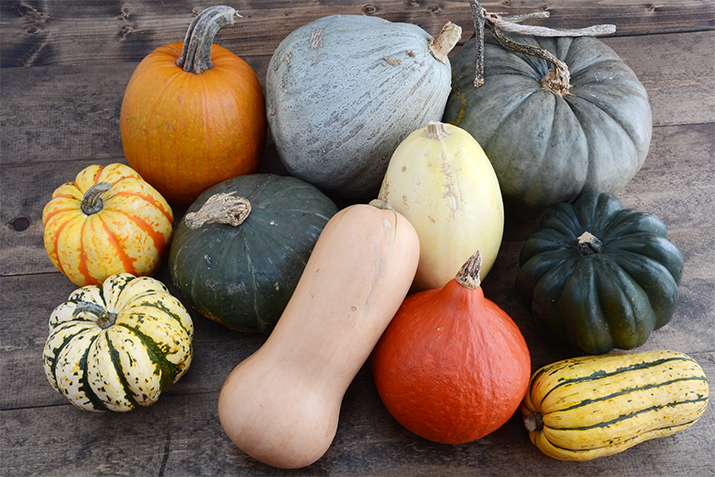
With a dozen common varieties readily available, choosing a winter squash to prepare can be confounding for the home cook. We’ve compiled descriptions of common varieties as well as some handy tips for selecting the right squash for you and plenty of delicious squash recipes you’ll love.

General selection tips

Winter squash are harvested late summer through fall, then “cured” or “hardened off” in open air to toughen their exterior. This process ensures the squash will keep for months without refrigeration. Squash that has been hurried through this step and improperly cured will appear shiny and may be tender enough to be pierced by your fingernail. When selecting any variety of winter squash, the stem is the best indication of ripeness. Stems should be tan, dry, and on some varieties, look fibrous and frayed, or corky. Fresh green stems and those leaking sap signal that the squash was harvested before it was ready. Ripe squash should have vivid, saturated (deep) color and a matte, rather than glossy, finish.

Acorn

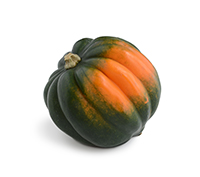
This forest green, deeply ribbed squash resembles its namesake, the acorn. It has yellow-orange flesh and a tender-firm texture that holds up when cooked. Acorn’s mild flavor is versatile, making it a traditional choice for stuffing and baking. The hard rind is not good for eating, but helps the squash hold its shape when baked.
  • Selection: Acorn squash should be uniformly green and matte—streaks/spots of orange are fine, but too much orange indicates over ripeness and the squash will be dry and stringy.
  • Best uses: baking, stuffing, mashing.
  • Other varieties: all-white “Cream of the Crop,” and all-yellow “Golden Acorn.”

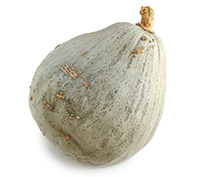
Blue Hubbard

Good for feeding a crowd, these huge, bumpy textured squash look a bit like a giant gray lemon, tapered at both ends and round in the middle. A common heirloom variety, Blue Hubbard has an unusual, brittle blue-gray outer shell, a green rind, and bright orange flesh. Unlike many other winter squashes, they are only mildly sweet, but have a buttery, nutty flavor and a flaky, dry texture similar to a baked potato.
  • Selection: Choose a squash based on size—1 pound equals approximately 2 cups of chopped squash (tip: if you don’t have use for the entire squash, some produce departments will chop these into smaller pieces for you).
  • Best Uses: baked or mashed, topped with butter, sea salt, and freshly ground black pepper.
  • Other varieties: Golden or Green Hubbard, Baby Blue Hubbard.

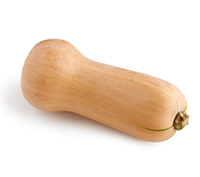
Butternut

These squash are named for their peanut-like shape and smooth, beige coloring. Butternut is a good choice for recipes calling for a large amount of squash because they are dense—the seed cavity is in the small bulb opposite the stem end, so the large stem is solid squash. Their vivid orange flesh is sweet and slightly nutty with a smooth texture that falls apart as it cooks. Although the rind is edible, butternut is usually peeled before use.

  • Selection: Choose the amount of squash needed by weight. One pound of butternut equals approximately 2 cups of peeled, chopped squash.
  • Best uses: soups, purees, pies, recipes where smooth texture and sweetness will be highlighted.

Delicata

This oblong squash is butter yellow in color with green mottled striping in shallow ridges. Delicata has a thin, edible skin that is easy to work with but makes it a poor squash for long-term storage; this is why you’ll only find them in the fall. The rich, sweet yellow flesh is flavorful and tastes like chestnuts, corn, and sweet potatoes.

  • Selection: Because they are more susceptible to breakdown than other winter squash, take care to select squash without scratches or blemishes, or they may spoil quickly.
  • Best Uses: Delicata’s walls are thin, making it a quick-cooking squash. It can be sliced in 1/4-inch rings and sauteed until soft and caramelized (remove seeds first), halved and baked in 30 minutes, or broiled with olive oil or butter until caramelized.
  • Other varieties: Sugar Loaf and Honey Boat are varieties of Delicata that have been crossed with Butternut. They are often extremely sweet with notes of caramel, hazelnut, and brown sugar (They’re delicious and fleeting, so we recommend buying them when you find them!).

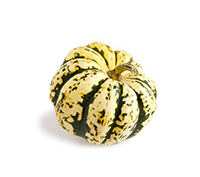
Heart of Gold/Festival/Carnival

These colorful, festive varieties of squash are all hybrids resulting from a cross between Sweet Dumpling and Acorn, and are somewhere between the two in size. Yellow or cream with green and orange mottling, these three can be difficult to tell apart, but for culinary purposes, they are essentially interchangeable. With a sweet nutty flavor like Dumpling, and a tender-firm texture like Acorn, they are the best of both parent varieties.
  • Selection: Choose brightly colored squash that are heavy for their size.
  • Best uses: baking, stuffing, broiling with brown sugar.

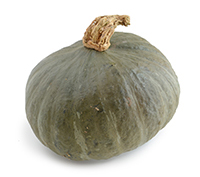
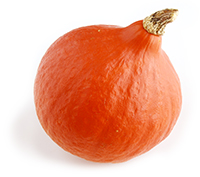
Kabocha (Green or Red)

Kabocha can be dark green with mottled blue-gray striping, or a deep red-orange color that resembles Red Kuri. You can tell the difference between red Kabocha and Red Kuri by their shape: Kabocha is round but flattened at stem end, instead of pointed. The flesh is smooth, dense, and intensely yellow. They are similar in sweetness and texture to a sweet potato.
  • Selection: Choose heavy, blemish free squash. They may have a golden or creamy patch where they rested on the ground.
  • Best Uses: curries, soups, stir-fry, salads.
  • Other varieties: Buttercup, Turban, Turk’s Turban.

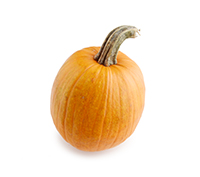
Pie Pumpkin

Pie pumpkins differ from larger carving pumpkins in that they have been bred for sweetness and not for size. They are uniformly orange and round with an inedible rind, and are sold alongside other varieties of winter squash (unlike carving pumpkins which are usually displayed separately from winter squash). These squash are mildly sweet and have a rich pumpkin flavor that is perfect for pies and baked goods. They make a beautiful centerpiece when hollowed out and filled with pumpkin soup.
  • Selection: Choose a pie pumpkin that has no hint of green and still has a stem attached; older pumpkins may lose their stems.
  • Best uses: pies, custards, baked goods, curries and stews.

Red Kuri

These vivid orange, beta carotene-saturated squash are shaped like an onion, or teardrop. They have a delicious chestnut-like flavor, and are mildly sweet with a dense texture that holds shape when steamed or cubed, but smooth and velvety when pureed, making them quite versatile.

  • Selection: Select a smooth, uniformly colored squash with no hint of green.
  • Best Uses: Thai curries, soups, pilafs and gratins, baked goods.
  • Other varieties: Hokkaido, Japanese Uchiki.

Spaghetti

These football-sized, bright yellow squash are very different from other varieties in this family. Spaghetti squash has a pale golden interior, and is stringy and dense—in a good way! After sliced in half and baked, use a fork to pry up the strands of flesh and you will see it resembles and has the texture of perfectly cooked spaghetti noodles. These squash are not particularly sweet but have a mild flavor that takes to a wide variety of preparations.
  • Selection: choose a bright yellow squash that is free of blemishes and soft spots.
  • Best uses: baked and separated, then mixed with pesto, tomato sauce, or your favorite pasta topping.

Sweet Dumpling

These small, four- to-six-inch round squash are cream-colored with green mottled streaks and deep ribs similar to Acorn. Pale gold on the inside, with a dry, starchy flesh similar to a potato, these squash are renowned for their rich, honey-sweet flavor.
  • Selection: pick a smooth, blemish-free squash that is heavy for its size and is evenly colored. Avoid a squash that has a pale green tint as it is underripe.
  • Best uses: baking with butter and cinnamon.

Miscellaneous Varieties

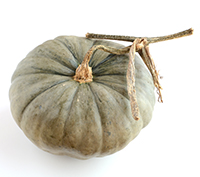
At some food co-ops, farmer’s markets, and apple orchards in the fall you may encounter unusual heirloom varieties of squash that are worth trying. If you like butternut, look for Galeux D’eysines, a rich, sweet and velvety French heirloom that is large, pale pink, and covered in brown fibrous warts. You might also like to try Long Island Cheese squash, a flat, round ribbed, beige squash that resembles a large wheel of artisan cheese. If you prefer the firmer, milder Acorn, you might like to try long Banana or Pink Banana squash. If you like a moist,dense textured squash (yam-like), try a Queensland Blue or Jarrahdale pumpkin. These huge varieties are from Australia and New Zealand, respectively, and have stunning brittle blue-green rinds and deep orange flesh. Both are good for mashing and roasting.
Interested in exploring how much there is to love about winter squash? Check out our collection of Sweet and Savory Winter Squash recipes and articles.

Source: https://www.grocery.coop/food-lifestyle/winter-squash-guide

You Are the Co-op Difference

By: Co+op

You are the reason food co‑ops are here

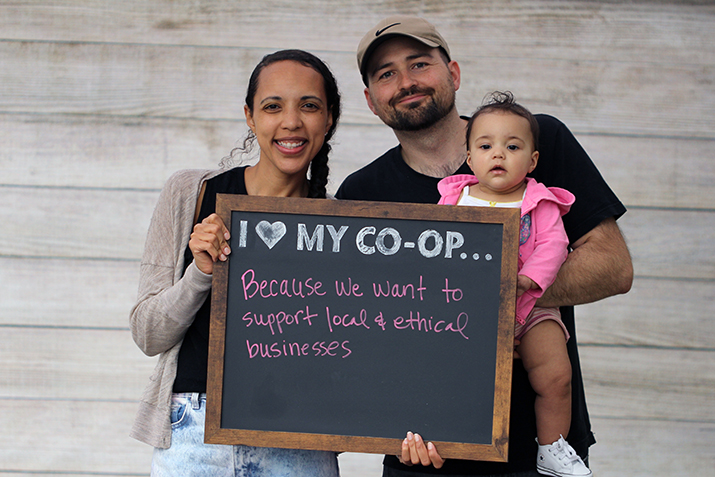
Food co-ops were formed by people in your community who wanted access to healthy, delicious food with reduced environmental impact and less waste, and co-ops remain community-owned and operated to this day. You help co-ops continue this proud tradition every time you choose to shop at one, invest in ownership or tell a friend about your local food co-op. You are the co-op difference.

Thanks to co-op shopper support, local farmers and producers continue to have a market for their delicious food, organic agriculture continues to grow, local food pantries and nonprofit organizations have a strong partner and together we are making progress towards a fairer food system.

People like you make it happen. When you shop at the co-op, your money makes a bigger impact in your local community than at a typical grocery store. At the co-op, your food dollars work to support a robust local economy, a vibrant community and a healthy environment.

When you shop the co-op, you cast a vote for a robust local economy, a vibrant community and a healthy environment.

You help create a robust local economy

When you buy local products, more money stays in your local  community, making it more economically resilient and sustainable. Co-op shopper are supporting local entrepreneurs and small businesses and are making a difference!

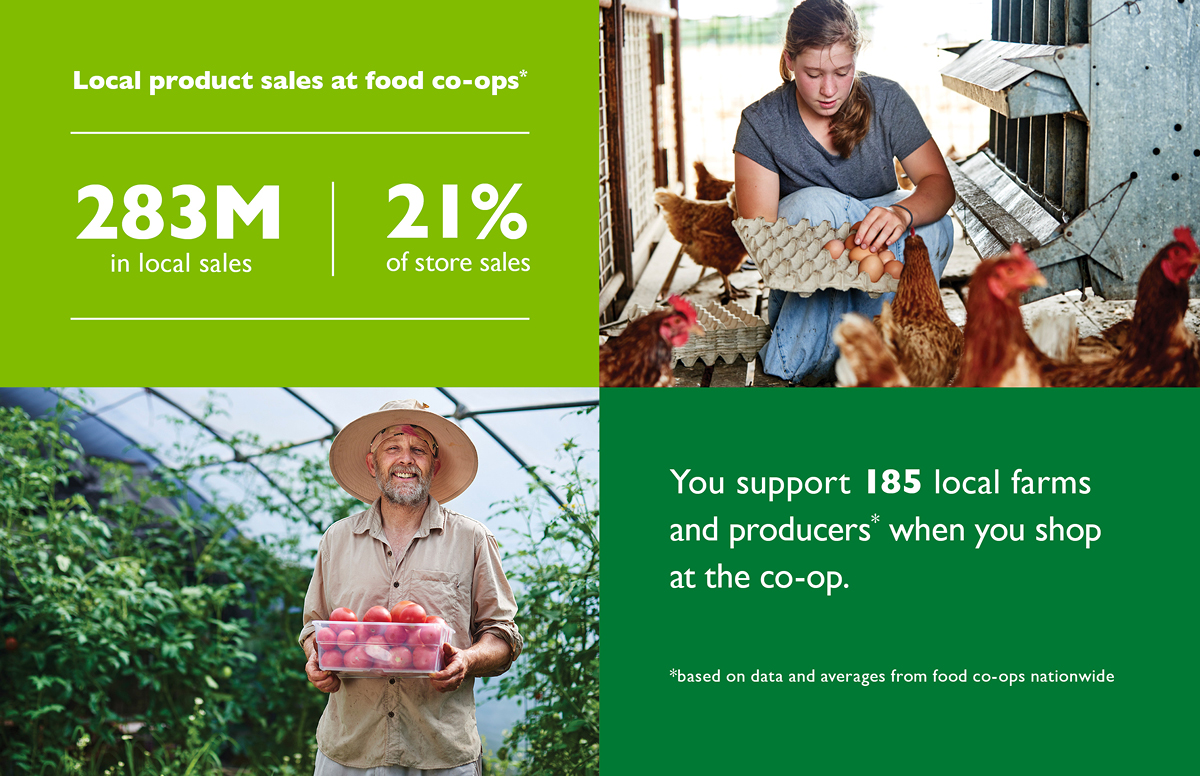
When you shop the at co-op, you are supporting local farmers and producers as well as investing in supply chain transparency. We have made a commitment to empowering entrepreneurs and small business owners in our area by bringing their products to market — but shoppers are the ones who keep them in business. Local products at food co-ops around the country average 21% of total co-op sales, compared with a national grocery store average of just 1.8%.

A stronger local economy is just one benefit. It’s easy to support local producers; their products are delicious! Co-op shoppers’ demand for the good stuff results in the average food co-op being able to work with 185 local farms and producers, resulting in over $283  million in combined sales of local products at co-ops nationwide.

In an increasingly consolidated food system, it’s difficult to know where your food is coming from, let alone who is getting paid to grow, pack, ship and stock it. When you buy local products you are creating local jobs and can easily see who benefits from your purchases.

You help grow a healthier environment

Organic agriculture supports the health of our planet. Organic farming methods are more sustainable and have been identified as a key way to slow down climate change. Whether you buy one organic product or many, you are part of the solution!

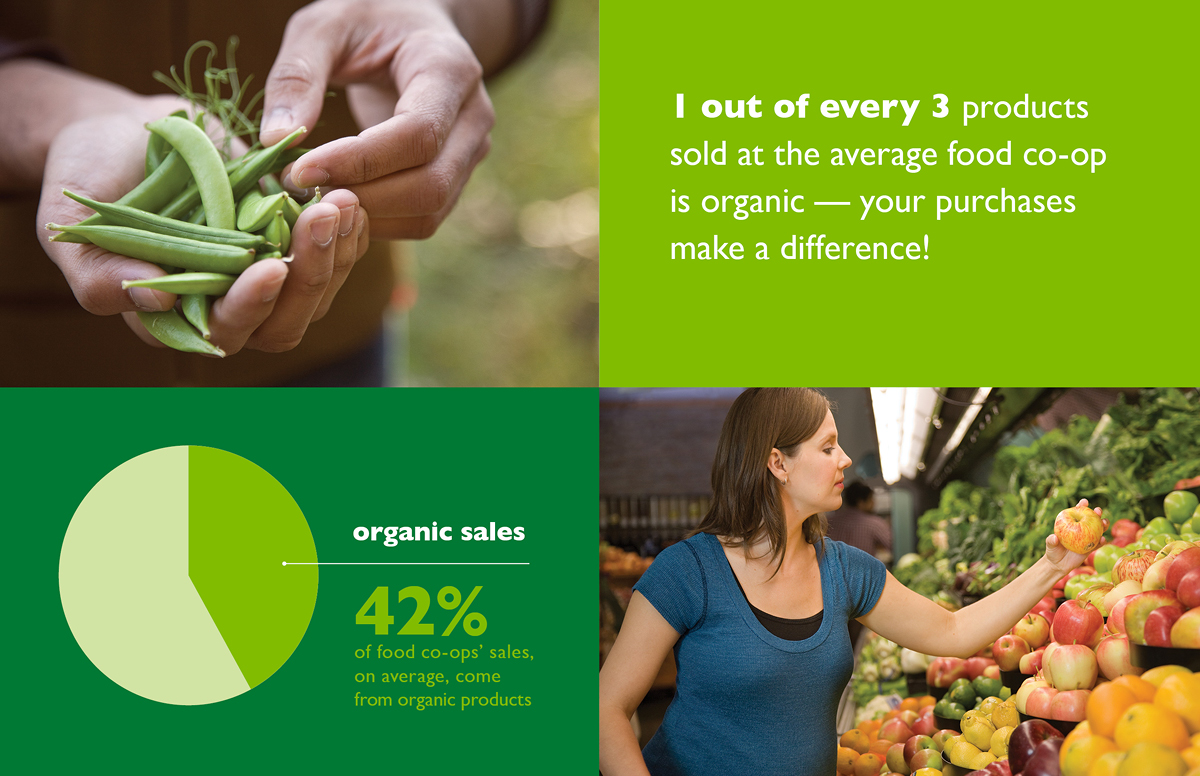
Whether you buy a few organic products or many, that purchase helps support the current and future health of our planet. Organic farming methods have been scientifically validated as being not only more sustainable, but a potential answer to some of our most pressing environmental problems. On average more than 33% of the products co-ops carry are USDA Certified Organic and represent 42% of a co-op’s total sales, compared with a national grocery store average of just 5%.

Certified organic food by law cannot be grown using toxic pesticides, synthetic fertilizers or GMO seeds. Beyond the benefit to individual shoppers is the positive impact organic agriculture has on natural systems. Organic methods are supportive of all levels of life from soil microbes to pollinators to the health of farm workers in the fields.

Nationwide, co-op shoppers demonstrate an inspiring commitment to the environment, with organic sales at co-ops totaling over $415 million annually.

You help to tackle food waste

Co-op shoppers support the production of fresh, organic veggies, free range meats, pastured dairy, wholesome deli and baked goods; food co-ops make sure as little gets wasted as possible.

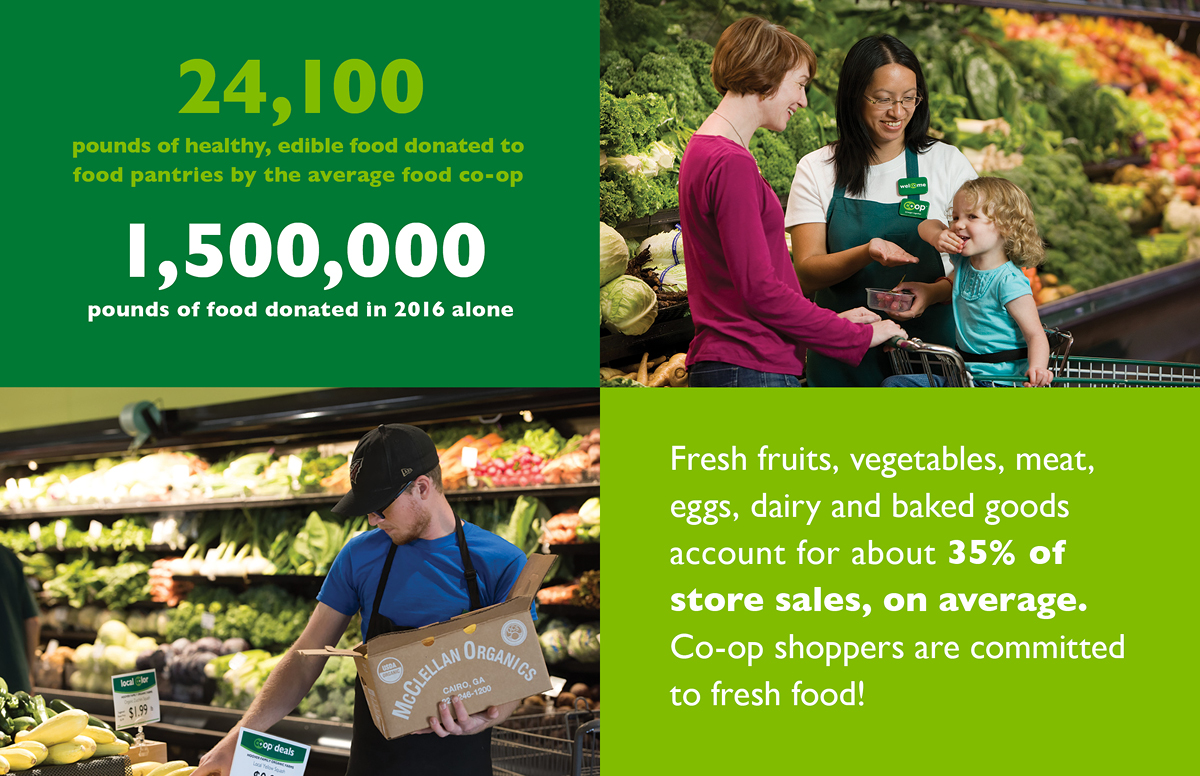
Co-op shoppers love to eat fresh, with sales of fresh (perishable) foods at co-ops representing 35% of total sales, slightly more than your typical grocery store (32%). Co-op shoppers support the production of fresh, organic, locally grown vegetables and fruits, humanely raised and grass fed meats, free range eggs, pastured dairy, wholesome deli food and bakery items, artisan breads and cheeses. Who’s hungry?

The flip side of all that fresh goodness is that food spoilage is a perennial challenge for the food industry. Diverting food from the landfill is the key, and co-ops tackle that through donations to food pantries, composting and better utilization of cooking scraps.

Nationally, the average food co-op is donating 24,100 pounds of healthy, edible food to food pantries annually, with a total of more than 1.5 million pounds of food donated in 2016 alone. Similarly sized grocery stores divert an average of 12,500 pounds, about half of what co-ops do.

You help bring people together

You don’t have to be an owner to shop the co-op — but ownership is empowering and everyone is welcome. Co-op shoppers are investing in a better way of doing business.

As a co-op shopper, you can choose to invest in ownership. You don’t have to be an owner to shop at the vast majority of food co-ops, but ownership is economically empowering and gives you a voice in how the co-op is run. Everyone is welcome to own a share of the co-op.

Democratically elected boards govern with guidance from seven international cooperative principles that apply to all cooperative businesses. These principles are designed to help directors and managers of the co-op make decisions based on a commitment to economic and social justice and equity for all stakeholders. Crucial among these is voluntary, open ownership without discrimination based on gender, social, racial, political or religious identification.

The principles that guide co-ops are in many ways responsible for the inspiring community, economic and environmental impact that sets us apart from conventional grocers. It is because of owner commitment to this vision and these values that a better way of doing business is possible.

You help to nurture community

Co-op shoppers support the work of local organizations that are dedicated to making a better world for us all. Co-op shoppers are improving local communities nationwide!

Co-op shoppers are incredibly generous — in 2016, food co-ops contributed over $2.6 million to charitable causes in their local communities, in both cash and in-kind donations, thanks to shoppers’ patronage and continued support of charitable programs.

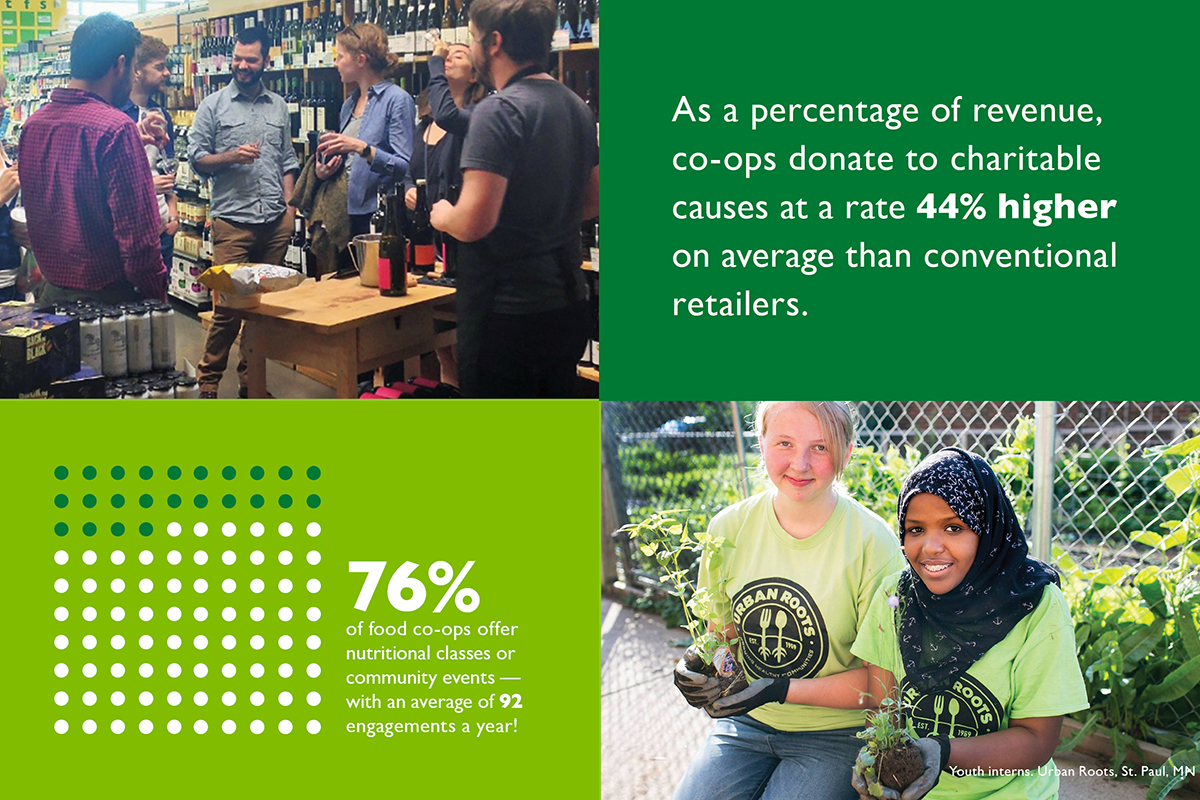
As community-owned and operated organizations, co-ops  are able to ensure that a higher percentage of revenue is donated than at typical grocery stores, a 44% higher rate on average, to be exact! Co-ops offer a variety of ways for owners and customers to donate to community organizations, whether by voting on recipients at the annual meeting or by providing customers the option of “rounding-up” purchases to the nearest dollar at the register, earmarked as a donation.

Co-op shopper support also makes it possible to provide nutritional education, classes and community events at co-ops nationwide. With an average of 92 outreach events per co-op each year, there is almost always something going on!

You help to grow fair trade business

When you purchase fair trade products, you are contributing to the improvement of people’s lives. Thanks to co-op shopper support, co-ops are one of the best places to find fair trade products in the United States.

At the co-op, you can choose to purchase fair trade certified versions of products you love like coffee, tea and chocolate. Fair trade certification means that the producers are getting a fair price for their products and their labor.

Co-ops sell a higher percentage of fair trade products than other natural and organic products grocery stores, and co-op shoppers’ support of fair trade is huge. Combined co-op sales of fair trade products nationally top $32 million annually. 

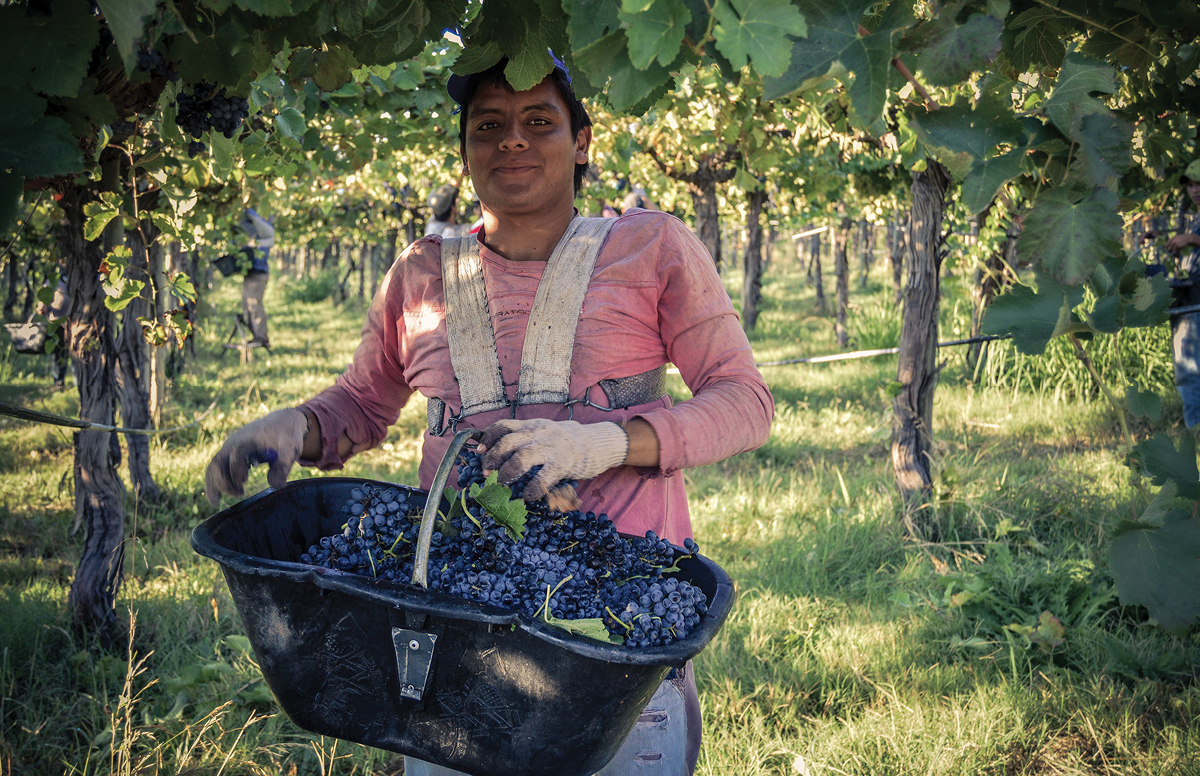
Co-ops across the country routinely work together to raise awareness about and increase support for the great things fair trade businesses are accomplishing. In 2016, co-op shoppers raised over $80,000 for La Riojana Cooperative in Argentina, whose fair trade organic olive oil and wines are exclusively available at co-ops. Co-op shopper support is helping family farmers attain organic certification for their vineyards and improve operations.

You help to support sustainable solutions

Co-op shoppers demonstrate a deep concern for the environment. Co-ops take this commitment seriously and are working together to take on some of today’s biggest challenges. Co-op shoppers are at the center of what makes the co-op difference!

Since 2012, food co-ops have been working together to offset a portion of greenhouse gas emissions associated with business travel and utilities by growing a Co+op Forest  in the Peruvian Amazon.

The idea behind this unique carbon offset program is simple: food co-ops, directly and through their national co-op, calculate their annual carbon emissions (from business travel, utilities, etc.), then fund the planting or protection of a corresponding number of trees to absorb (offset) that carbon. When trees naturally absorb carbon dioxide — a greenhouse gas — from the atmosphere, it effectively slows the rate of climate change.

As of 2016, Co+op Forest is home to an estimated 1.4 million trees, which will offset 2,738 metric tons CO2e within their lifetimes. We are proud to report that due aCo+op Forest resides was honored as a UNESCO Biosphere Reserve, to serve as a model of sustainable communities.

About this content

This content is based on a 2017 study commissioned by National Co+op Grocers and conducted by the ICA Group, a not-for-profit consulting firm with expertise in cooperatives, economic development and business research.

Our co-op is a member of National Co+op Grocers, (NCG)—the organization behind this site—a business services cooperative for retail food co-ops located throughout the United States. NCG represents 147 retail food co-ops operating over 200 stores in 38 states with combined annual sales over $2.1 billion and over 1.3 million consumer-owners.

As part of an ongoing commitment to demonstrate the value of the cooperative business model to local communities, NCG began measuring the social, environmental and economic impacts of food co-ops in 2012 compared to conventional grocers.

A PDF version of this content is available in booklet format.

Check out the results of our 2012 food co-op imact study, Healthy Foods, Healthy Communities, which includes a video and infographics.

Source: https://www.grocery.coop/article/you-are-co-op-difference