Veggie Trim Stock

By: Robin Asbell

Recipe Information

Total Time: 1 hour, 10 minutes active

Servings: 6 cups

Whenever you cut up vegetables for a recipe, save onion skins, carrot peels, celery bottoms and tops, potato and sweet potato skins, garlic clove trimmings and skins, tomato trims, mushroom trims, zucchini, or other mild veggies. You can freeze them in zip-top bags until you have enough to make stock. Steer clear of strong veggies like cabbage, broccoli, peppers, fennel and kale, unless you plan to use the stock with those particular flavors. Adding a dry white wine will balance the sweetness of the veggies, but it is fine without, too.

Ingredients

  • 8 cups veggie trimmings
  • 8 cups water
  • 1 bay leaf
  • 1 teaspoon black peppercorn
  • 1/2 teaspoon salt
  • 3 dried mushrooms, optional
  • 1/4 cup white wine, optional

Preparation

  1. Combine the veggies and water, bay leaf, peppercorns and salt and bring to a boil over high heat. Lower the heat immediately (boiling too long makes it bitter) and cover, to simmer very gently. Leave covered so the water will not boil away. Add wine, if desired.
  2. Set a timer for 45 minutes.
  3. At 45 minutes, strain the stock, and discard the veggies (they make great compost).
  4. Taste the stock, add seasonings as desired.

Nutritional Information

Per 1 cup serving: 132 calories; 0 g. fat; 0 mg. cholesterol; 281 mg. sodium; 30 g. carbohydrates; 6 g. fiber; 3 g. protein

Source: https://www.grocery.coop/recipes/veggie-trim-stock

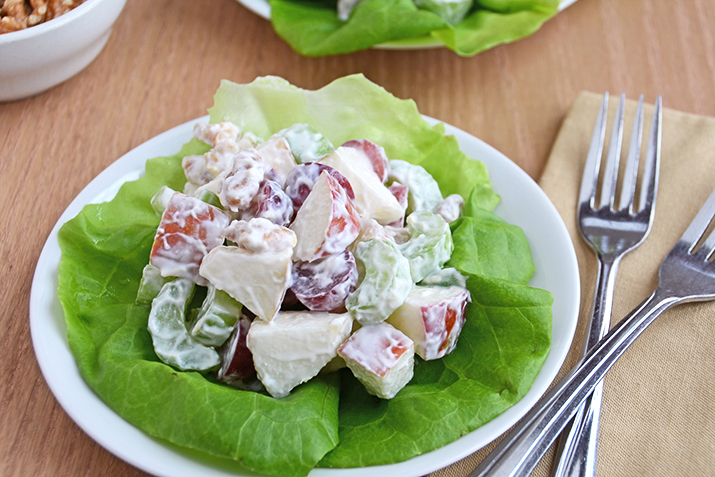
Waldorf Salad with Yogurt and Honey

By: Co+op

Recipe Information

Total Time: 30 minutes

Servings: 4-6

Yogurt replaces the traditional mayonnaise in a refreshing version of this American classic.

Ingredients

  • 2 cups apple (1 large apple), cut into bite-sized pieces
  • 1 cup seedless grapes, halved
  • 1 cup celery (2-3 ribs), cut into 1/4-inch pieces
  • 1/2 cup toasted walnuts, coarsely chopped
  • 1 lemon, juice and zest (about 2-3 tablespoons juice)
  • 1/2 cup Greek yogurt
  • 1 teaspoon honey
  • Salt and pepper to taste

Preparation

In a small bowl, whisk together the lemon juice, zest, yogurt and honey. In a large salad bowl, gently toss the apples, grapes, celery, and walnuts with the dressing. Season to taste with salt and pepper. Substitute nonfat Greek yogurt for a lower-fat version if you like.

Serving Suggestion

Showcasing the fruits of autumn, a scoop of Waldorf salad is delicious with a brunch omelet or frittata, or served on a bed of bibb lettuce or spinach alongside spanakopita or stuffed grape leaves.

Nutritional Information

190 calories, 10 g. fat, 4 mg. cholesterol, 36 mg. sodium, 23 g. carbohydrate, 4 g. fiber, 6 g. protein

Source: https://www.grocery.coop/recipes/waldorf-salad-with-yogurt-and-honey

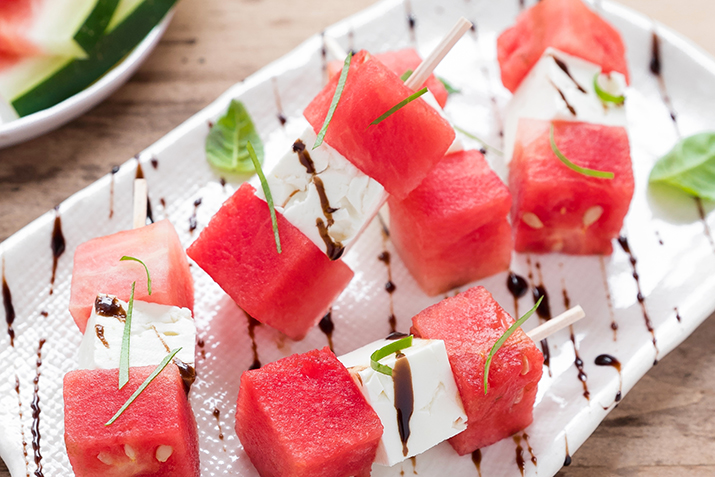
Watermelon Feta Appetizers

By: Co+op

Recipe Information

Total Time: 30 minutes

Servings: 6

Sweet, juicy watermelon, tangy balsamic sauce and savory feta are delightful in this simple, elegant appetizer.

Ingredients

  • 2 1/2 tablespoons olive oil
  • 1 tablespoon plus 1 teaspoon balsamic vinegar
  • 1 teaspoon raspberry preserves
  • Dash each of onion powder,
  • freshly-ground black pepper
  • and sea salt
  • 1 pound seedless watermelon, cut into 1/2-inch cubes
  • 6 ounces feta cheese, cut into 1/2-inch cubes
  • 2 tablespoons fresh basil, chiffonade

Preparation

  1. Whisk together the olive oil, balsamic vinegar, raspberry preserves, onion powder, pepper and salt in a small bowl until sauce becomes smooth. In a small saucepan, heat the sauce over medium heat until bubbling. Reduce the heat to low and cook, stirring regularly, until the sauce is reduced by half and becomes syrupy, about 10-15 minutes.  Remove from heat and let cool.
  2. Using toothpicks or appetizer skewers, stack a piece of feta between two pieces of watermelon on each toothpick. Place each stack neatly on a platter, and sprinkle with basil. Drizzle the raspberry balsamic sauce over the watermelon-feta stacks before serving.

Serving Suggestion

Accompany these colorful and light appetizers with tall glasses of sparkling water spiked with lemonade, or a semi-sweet Prosecco. In a hurry? Use raspberry balsamic vinegar for the sauce; just cook in a small saucepan over medium heat for 10 to 15 minutes until it is reduced to the consistency of a sauce.

Nutritional Information

150 calories, 12 g. fat, 25 mg. cholesterol, 320 mg. sodium, 8 g. carbohydrate, 0 g. fiber, 5 g. protein

Source: https://www.grocery.coop/recipes/watermelon-feta-appetizers

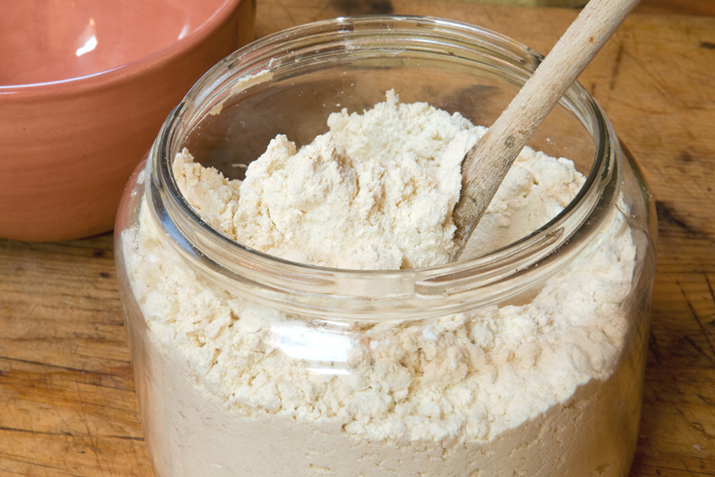
Wheat-free Flour Mix

By: Philip Speer

Recipe Information

Total Time: 5 minutes

Servings: 1 cup (makes 7 cups)

An easy, wheat-free flour mix for all-purpose use in baking.

Ingredients

  • 2 1/4 cups corn starch
  • 2 cups tapioca starch
  • 1 cup white rice flour
  • 1 1/3 cups brown rice flour
  • 3/4 cup nonfat milk powder
  • 3 tablespoons xanthan gum

Preparation

  1. Combine all ingredients in a large bowl and mix well.
  2. Store in the freezer, in an airtight container, for best results.

Usage Suggestion

Use this mixture in place of all-purpose flour, in baking recipes, including, muffins, cookies, brownies and quick breads.

Nutritional Information

880 calories, 1 g. fat, 5 mg. cholesterol, 75 mg. sodium, 107 g. carbohydrate, 4 g. fiber, 8 g. protein

Source: https://www.grocery.coop/recipes/wheat-free-flour-mix

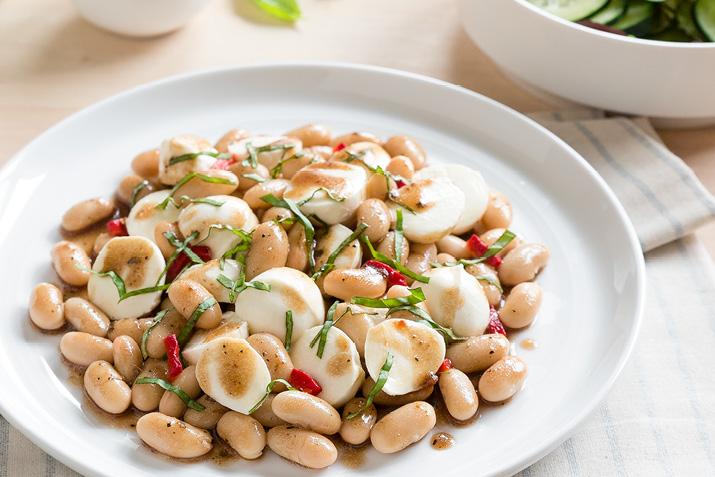
White Bean and Fresh Mozzarella Salad with Basil

By: Co+op

Recipe Information

Total Time: 10 minutes

Servings: 6

This is one of our High Five recipes, made from five main ingredients or less. Simplify your life with more delicious High Five recipes.

Tender white beans and fresh mozzarella make a satisfying salad, laced with perky red peppers and doused with balsamic dressing. Fresh basil makes it taste like summertime, any time of year.

Ingredients

The High Five

  • 2 15-ounce cans white beans, drained
  • 1 pound fresh mozzarella, cut into bite-sized pieces
  • 1 cup lightly packed fresh basil leaves, torn into pieces
  • 1 1/2 cups jarred roasted red peppers, drained and sliced
  • 6 tablespoons prepared balsamic vinaigrette

Preparation

  1. Rinse the beans and drain well. Place in a large bowl.
  2. Add the mozzarella, basil, sliced red peppers and vinaigrette. Toss gently to coat with dressing.
  3. Serve or refrigerate, covered, for up to 4 days.

Serving Suggestion

This heartier version of a traditional Caprese salad is delicious served with sliced baguette that has been toasted and rubbed with olive oil and garlic. Serve a scoop of the salad over a bed of mixed greens or wrap into a tortilla for lunch.

Nutritional Information

380 calories, 18 g. fat, 60 mg. cholesterol, 180 mg. sodium, 26 g. carbohydrate, 9 g. fiber, 28 g. protein

Source: https://www.grocery.coop/recipes/white-bean-and-fresh-mozzarella-salad-basil

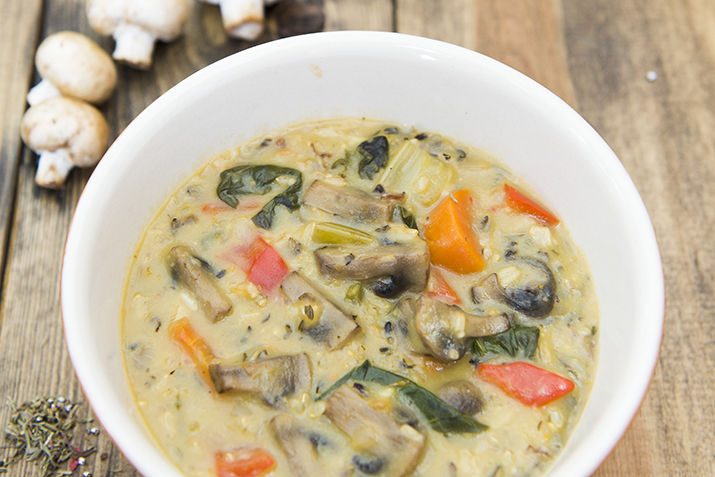
Wild Rice Mushroom Soup

By: Co+op

Recipe Information

Total Time: 1 hour; 30 minutes total

Servings: 6

This more nuanced version of classic wild rice mushroom soup is flavored with thyme, white wine and a host of veggies.

Ingredients

  • 2 tablespoons vegetable oil
  • 1 cup diced yellow onion
  • 1/2 cup diced celery
  • 1/2 cup diced carrots
  • 1/2 cup diced red bell peppers
  • 3 cloves garlic, minced
  • 1 pound button mushrooms, sliced
  • 2 teaspoons dried thyme leaf
  • 1/2 cup white wine
  • 1 cup wild rice (or wild rice blend)
  • 6 cups vegetable broth
  • 1 cup roughly-chopped spinach
  • 1 cup whole milk (or cream, if preferred)
  • Salt
  • Ground black pepper

Preparation

In a large Dutch oven or stockpot, heat the oil over medium-high heat. Saute the onion, celery, carrots and bell peppers for 5 to 10 minutes before adding the garlic, mushrooms, thyme, white wine and a pinch of salt. Cook for a few minutes until the mushrooms start to soften. Add the rice and broth and stir well. Bring to a boil, reduce the heat, cover and simmer 30 minutes or until rice is tender. Add the spinach and cook for a few more minutes. Stir in the milk and season to taste with salt and ground black pepper. Serve warm.

Serving Suggestion

The rustic, hearty flavors of this soup complement simple roasted meats or poultry. Feature the soup as an entrée accompanied by a crisp Waldorf salad or garlic bread. Toasted pine nuts make a nice garnish.

Nutritional Information

252 calories, 6 g. fat, 4 mg. cholesterol, 226 mg. sodium, 37 g. carbohydrate, 5 g. fiber, 9 g. protein

Source: https://www.grocery.coop/recipes/wild-rice-mushroom-soup

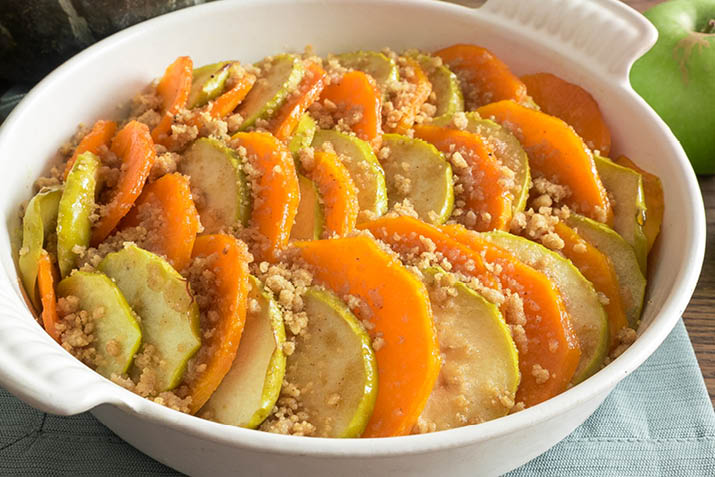
Winter Squash and Apple Bake

By: Co+op

Recipe Information

Total Time: 1 hour 20 minutes; 20 minutes active

Servings: 8

The sweetness of baked apples and squash is accentuated with fall’s warm spices. A perfect side for pork or poultry.

Ingredients

  • 2 pounds winter squash, peeled, seeded and cut into 1/4-inch thick slices
  • 2 Granny Smith apples, cored and cut into 1/4- to 1/2-inch thick slices
  • 3 tablespoons maple syrup
  • 3 tablespoons brown sugar
  • 2 tablespoons flour
  • 1/4 teaspoon ground cinnamon
  • 1/4 teaspoon ground nutmeg
  • 1/4 teaspoon ground allspice
  • Pinch of salt and black pepper
  • 1/4 cup cold butter, cut into small pieces
  • 1 tablespoon butter, melted

Preparation

  1. Preheat the oven to 375° F. Grease a 9 x 13 inch casserole dish with melted butter. Evenly layer the squash and apple slices in the casserole dish, alternating and slightly overlapping the squash slices with the apple slices, until all slices are gone. Drizzle the maple syrup over the squash and apples.
  2. In a small bowl, mix together the brown sugar, flour, spices, salt and pepper. Mix the butter into the flour/sugar mix with your fingers to make a crumbly mixture. Sprinkle the mixture evenly over the top of the squash and apples. Cover the dish with foil and bake for about 40 minutes or until the squash and apples start to become tender. Remove the foil, and let casserole brown for another 15 minutes. Serve warm.

Serving Suggestion

Use your choice of local apples and winter squash in this recipe, and serve as a side dish with ham, pork or poultry.

Nutritional Information

150 calories, 6 g. fat, 15 mg. cholesterol, 37 mg. sodium, 25 g. carbohydrate, 3 g. fiber, 1 g. protein

Source: https://www.grocery.coop/recipes/winter-squash-and-apple-bake

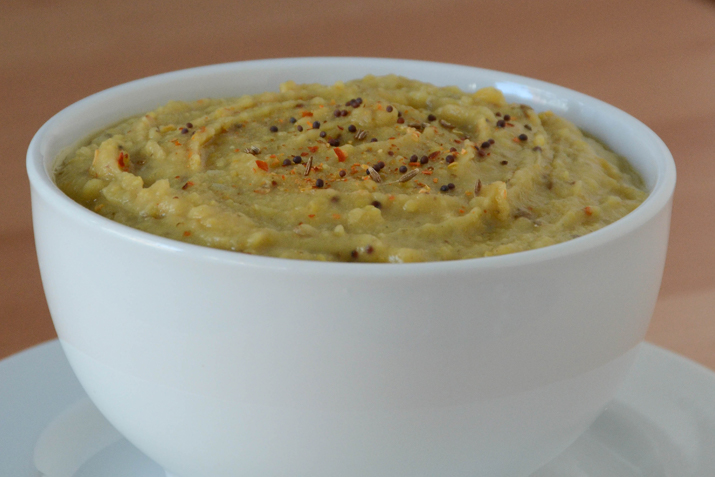
Yellow Split Pea Dal

By: Robin Asbell

Recipe Information

Total Time: 2 hours, 30 minutes active

Servings: 6

Dal is served at every lunch and dinner in the Indian tradition. Simple yellow rice, dal, chutneys and salads accompany whatever main course is served. You don’t have to make a whole spread, though, this soup is so tasty you can eat it with rice or flatbreads, steamed cauliflower, and a salad for a wholly satisfying  meal.

Ingredients

  • 1 large onion, diced
  • 1 tablespoon ghee or canola oil
  • 2 teaspoons black mustard seed
  • 2 teaspoons cumin seed
  • 2 tablespoons fresh ginger, minced
  • 1 medium jalapeno, chopped to taste
  • 1/2 teaspoon turmeric
  • 1/2 teaspoon red pepper flakes
  • 4 teaspoons ground coriander
  • 2 teaspoons ground cumin
  • 2 cups yellow split peas, cleaned
  • 6 cups water
  • 2 small potato, cubed
  • cayenne, optional
  • 1 teaspoon salt, to taste

Preparation

  1. In a 4 quart soup pot, saute onion in ghee. When onion is soft, add whole mustard and cumin seeds and saute 5 minutes more. Add dry spices, ginger and jalapeno and saute for 1 minute, stirring, until fragrant. Put the yellow split peas in the pot and add the water and potato. Raise the heat and bring to a boil, then reduce to a simmer. Simmer, stirring frequently, and adding water as needed, for 1 1/2 to 2 hours. When peas and potatoes are cooked, you can puree half of the mixture for a smoother soup.
  2. Taste, add more salt or the optional cayenne, and serve.

Serving Suggestion

To stay within the Indian tradition, serve with your favorite Indian main dish, yellow rice, chutneys and  salads. Or keep it simple with a side of rice or flatbreads, steamed cauliflower, and a salad for a wholly satisfying  meal.

Nutritional Information

347 calories, 2 g. fat, 0 mg. cholesterol, 425 mg. sodium, 65 g. carbohydrate,21 g. fiber, 19 g. protein

Source: https://www.grocery.coop/recipes/yellow-split-pea-dal

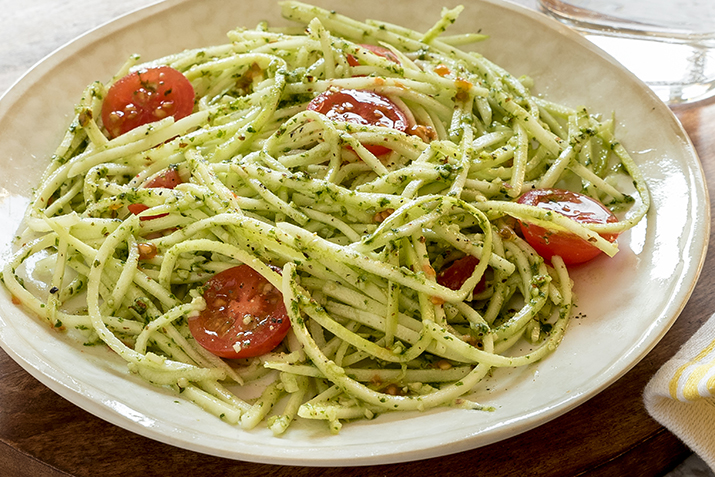
Zucchini Pesto “Pasta”

By: Co+op

Recipe Information

Total Time: 20 minutes

Servings: 4

Try this fresh delicious twist on pesto pasta, featuring zucchini “noodles” and almond-basil pesto. 

Ingredients

  • 1/3 cup unsalted almonds
  • 1/2 cup olive oil
  • 6 to 8 cloves of garlic, peeled
  • 3 packed cups fresh basil leaves, stems removed
  • 1/2 cup grated Parmesan cheese (optional)
  • 1 tablespoon lemon juice
  • 3 pounds zucchini
  • 1 cup halved cherry tomatoes
  • Salt and black pepper to taste

Preparation

  1. Using a blender or food processor, process the almonds, olive oil and garlic until they form a slightly-chunky paste. Blend the basil leaves into the almonds, olive oil and garlic, adding in small batches, until it forms a thick smooth paste. Blend in the grated Parmesan cheese and lemon juice until desired consistency and add salt to taste.
  2. Peel the zucchini and cut each in half lengthwise. Hold one half with one hand and use the tip of a spoon to scoop out the seeds. Repeat the process for all the zucchini.
  3. Using a julienne peeler or spiralizer, slice the zucchini into long, thin strips or spirals. Place zucchini “noodles” into a large bowl. Toss the zucchini noodles with the basil pesto, adding the cherry tomatoes before serving.

Serving Suggestion

A fresh and delicious twist on pesto pasta (with no wheat and no cooking required) is equally tasty as a salad course or a light lunch. Add whatever chopped fresh vegetables are abundant: radishes, carrots, cucumbers or cauliflower work well.

Nutritional Information

470 calories, 39 g. fat, 10 mg. cholesterol, 200 mg. sodium, 19 g. carbohydrate, 6 g. fiber, 18 g. protein

Source: https://www.grocery.coop/recipes/zucchini-pesto-pasta

Good Eating Can Be Fun!

By: Eve Adamson

I’ve been duped.

For years, I’ve read that if only parents would expose kids to more vegetables, they would eat them and like them. Veggies would be as desirable as candy, chips, and fast food. I’ve lamented my failure to present my own kids with enough healthy choices during their most impressionable years. That must explain why, as teenagers, they spend their hard-earned money on fast food when I’m not looking (I see those colorful wrappers and soda cups in the trash—I’m totally on to them!). If only I’d made more home cooked dinners in the early days! If only I’d filled their toddler plates more often with broccoli puree and rutabaga cubes! Then they would surely prefer carrots to French fries and Brussels sprouts to burgers.

It was a lie—at least, partially.

Every time I feed my granddaughter, I fill her plate with healthy foods: benign, lovely things like blueberries, sweet potato fries, carrot/pear puree, and tiny bits of avocado. Every time, with every food—even fruit!—she unceremoniously turns up her nose and pushes the plate away, as if she has been deeply offended by the mere suggestion of  foods other than grilled cheese or plain quesadillas. She won’t even try a bite. She won’t even let a bite get near her. Mealtime is the context in which she learned how to assert herself with her favorite word: “uh-uh,” accompanied by a head shake (seriously, what kid doesn’t like fruit?). Now that I have a chance to make an early impact, I’m realizing that exposure isn’t everything, as my granddaughter has proven to me too many times.

This got me thinking: if a preference for healthy foods isn’t as simple as exposure (even repeated exposure—forget that “seven tastes and they will like it” theory when a child won’t even try something once), then what’s the trick? What might inspire a child to be a little more adventurous, and start to develop that broader palate we all hope for in our children?

I think “fun” is the trick. I think the answer is to take a little more time to make the good food, the real food, more fun. Why does fast food get the reputation as the “fun” food? What’s so fun about chemicals and fake ingredients? It’s backwards, and I think we can do something about it, but we have to go further than offering a vegetable and hoping for the best. Children might not think they like squash or spinach, but if vegetables weren’t so darned serious, if eating healthful food actually meant having a good time, then kids might be more inspired to take a taste, and one taste might lead to another, and another.

Here are ten ideas for making food fun

1. Make babies.

Baby vegetables are cuter, sweeter, and less intimidating than “grown-up” vegetables. Baby peas, baby beets, real baby carrots (the kind with greenery attached), baby (new) potatoes, baby Brussels sprouts, and baby greens look like they were made for kids. Offer veggies with the “baby” prefix and kids might give them a try, if only out of solidarity (little things need to stick together!).

2. Add butter.

At least to kids, who are more sensitive to bitter tastes, most vegetables taste better with butter and a dash of salt, or even a sprinkle of cheese. When you offer “buttery beans” or “cheesy broccoli,” formerly suspicious foods can feel more familiar and approachable.

3. Let your food touch.

Some kids don’t want their food to touch, but don’t assume anything. Just the other day, I fried up some bacon and scrambled it with eggs and some chopped onions and spinach leaves. I topped it all with cheese, and guess what who ventured a few bites? (I pretended not to notice.)

4. Pilfer from pop culture.

Bright yellow summer squash might take on the name of a certain square yellow fellow of cartoon fame. Your kids love a particular pop star? Apply his or her name—Randy Kaplan carrots, anyone? Raffi red cabbage? In our house, a certain children’s show featuring British aliens in red, blue, yellow, and green suits used to inspire the names of wholegrain toast with fruit faces and homemade strawberry custard.

5. Use humor.

Who says food can’t be funny? A study from Cornell University demonstrated that kids are much more likely to help themselves to veggies if they have humorous names, like X-ray Vision Carrots, Silly Dilly Green Beans, or Power Punch Broccoli (vegetables with silly names had double the takers in the study).

6. Get artistic.

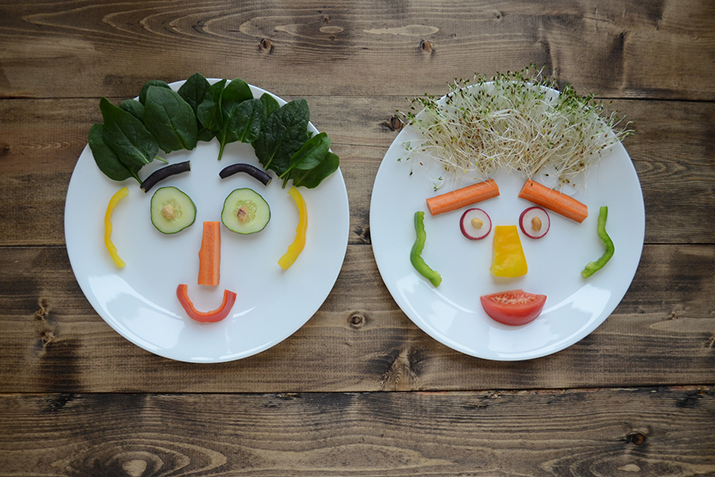
Make a plate into a “portrait” of your child made from vegetables (radish slices for eyes, a strip of yellow bell pepper or a nose, a tomato wedge for a smile, sprouts for hair?). What about a miniature nature scene with broccoli florets for trees over a bed of lettuce leaf “grass” with bits of shredded beets and red cabbage for flowers and a path of cucumber slices??

7. Go raw.

Roasting and stir-frying may make vegetables more appealing to grown-ups, but a lot of children prefer vegetables raw. Go beyond the old standards like carrots and celery. Try purple cauliflower florets, multi-colored bell pepper strips, cucumber half-moons, mild breakfast radishes, kohlrabi cut into sticks, shredded beets, and small tomatoes speared with toothpicks (different varieties come in yellow, orange, and green). A few raw veggies on the side in place of chips or fries might inspire some experimental crunching.

8. Get dippy.

As long as you’ve got out the raw vegetables, add something to dip them in. Dipping is fun! Ranch dressing is the old standby, but also try hummus, guacamole, mild salsa, French onion dip, even peanut butter. Or make your own in a rainbow of colors by mixing sour cream and sea salt with different vegetable purees (beets for pink, spinach for green, pumpkin for orange).

9. Play games.

The Tasting Game is fun and encourages bravery in the face of palate teasing.  At snack time, cover your child’s eyes and feed her small bites of different foods. Her job is to guess what they are. Kids get so distracted by the guessing, they forget to notice they are eating foods they might push away at the table. As kids get older make the guessing game harder. String beans: yellow, green, or purple? Bell peppers:  green, purple, red, or orange? Tomatoes: red, orange, yellow, or green?

10. Make it an event.

Healthful foods can be an adventure. Steam an artichoke, put out individual bowls of lemon butter, and make a family ritual out of pulling off the leaves and sliding them through your teeth, then peeling and cutting the heart and dividing it up between everyone. Who can collect the biggest pile of leaves? Grow cherry tomatoes in a planter or green peas on a trellis, then harvest the veggies with your child. Put on some calypso music and crack open a coconut together. Share the water and chunks of coconut meat. Take a weekly family field trip to the co-op and farmer’s market and let each child choose a veggie to serve with dinner. These are the traditions your children will remember, and the fun will rub off on your child’s perception of healthful food.

We all get rushed and life is busy, but if we take time for anything, it should be to bring more joy to the table. There’s nothing inherently serious about vegetables and other healthful foods, so slow down, get creative, and lighten up. Good eating really can be fun!
Source: https://www.grocery.coop/food-lifestyle/good-eating-can-be-fun